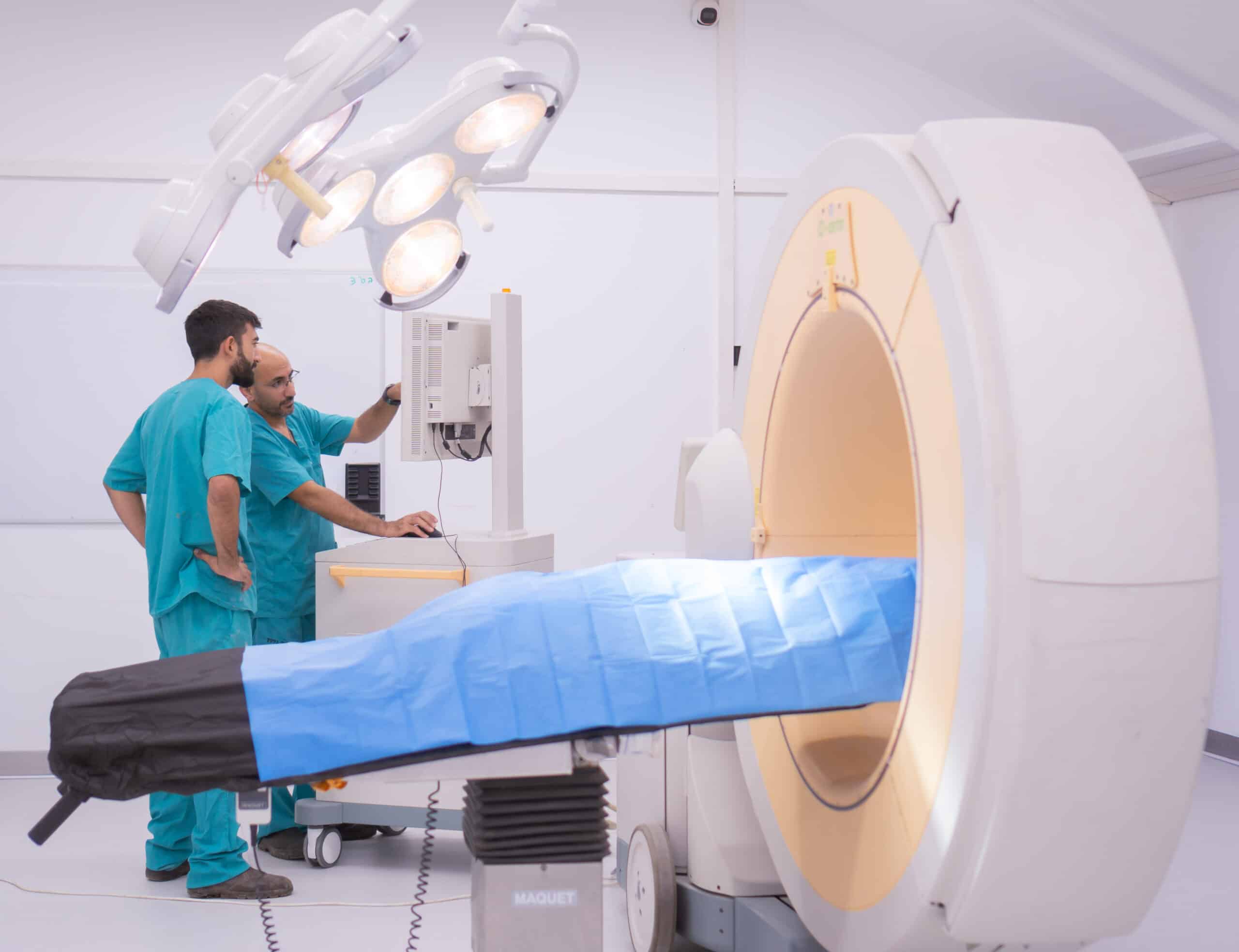
With over 30 years of combined expertise in preclinical research leadership, our team has guided dozens of IND-enabling programs from initial study design through successful regulatory submission — transforming promising compounds into candidates ready for first-in-human trials.
Expert Insight: The most costly mistake sponsors make is treating IND-enabling studies as an afterthought to discovery research. Every protocol decision — from species selection to dose group design — must be reverse-engineered from your proposed Phase 1 clinical protocol to ensure regulatory acceptance without costly study repeats.
What Exactly Are IND-Enabling Preclinical Studies?
At the heart of medical innovation, the journey from a promising compound in the laboratory to a drug administered to a human volunteer is governed by rigorous regulatory science. IND-enabling preclinical studies represent the critical bridge between discovery-phase research and the filing of an Investigational New Drug (IND) application.
These studies are not exploratory in nature — they are a required, regulatory-driven set of nonclinical investigations designed to demonstrate sufficient safety before any investigational agent can enter first-in-human (FIH) clinical trials. Understanding how to design, execute, and report these studies is essential for sponsors seeking to navigate the complex regulatory landscape efficiently and avoid costly delays or clinical holds.
IND-enabling studies are a defined package of nonclinical investigations whose primary purpose is to generate the safety, pharmacokinetic, and pharmacological data that regulatory agencies — most notably the FDA — require before granting permission to dose humans. Unlike earlier discovery work, every element of an IND-enabling program is shaped by regulatory expectations, from study design to final report formatting.
Core Components of an IND-Enabling Program
-
Repeat-dose toxicology in at least two relevant species -
Safety pharmacology assessments (CNS, cardiovascular, respiratory) -
Pharmacokinetics and toxicokinetics for systemic exposure characterization -
Genotoxicity battery for small molecule candidates
For a broader perspective on the role of animal studies in advancing medical science, explore our dedicated resource on Preclinical Animal Studies.
How Do Regular Preclinical Studies Differ from IND-Enabling Studies?
Early-stage preclinical work — including target validation, mechanism-of-action studies, and proof-of-concept experiments — is often conducted under flexible, non-GLP conditions. These studies serve internal decision-making: they help teams select lead candidates, optimize formulations, and build preliminary pharmacological profiles. Documentation standards, while important, are typically less formal than what regulatory submissions demand.
IND-enabling studies operate under an entirely different paradigm. They must adhere to specific international guidelines such as ICH M3(R2), comply with Good Laboratory Practice (GLP) regulations for pivotal safety studies, and produce reports formatted for regulatory review.
| Aspect | Early Preclinical | IND-Enabling |
|---|---|---|
| Primary Purpose | Internal decision-making | Regulatory submission |
| GLP Compliance | Typically non-GLP | Required for pivotal studies |
| Documentation | Flexible standards | CTD-formatted reports |
| Goal | Understanding the drug | De-risking human exposure |
⚠️ Real-World Scenario: Why This Distinction Matters
Consider a biotech company that generated compelling proof-of-concept data in rodent disease models. Enthusiastic about moving forward, the team submitted an IND application using those non-GLP exploratory studies as the primary safety justification. The result: the FDA issued a clinical hold, citing insufficient GLP-compliant toxicology data, absence of formal safety pharmacology endpoints, and inadequate toxicokinetic assessments. Months of delay and significant additional expenditure followed.
Which Preclinical Studies Are Typically Required for an IND Application?

The nonclinical section of an IND application generally encompasses three broad categories: nonclinical pharmacology, toxicology, and ADME/PK/TK. However, the exact requirements are not one-size-fits-all. Variables such as the drug molecule type, route of administration, proposed duration of human treatment, and the target patient population all influence what the regulatory agency expects to see.
The legal framework for IND content is codified in 21 CFR § 312.23.
Core Studies
-
Repeat-dose toxicity (rodent + non-rodent) -
Safety pharmacology core battery -
Toxicokinetic assessments -
Clinical pathology panels
Context-Dependent Studies
-
Genotoxicity battery (small molecules) -
Reproductive toxicology studies -
Immunogenicity assessments (biologics) -
Biodistribution studies (cell/gene therapy)
What Animal Models Are Necessary and How Is Species Selection Justified?
Regulatory guidelines typically require repeat-dose toxicity data from a rodent species (commonly the rat) and a non-rodent species (such as the dog, mini-pig, or non-human primate). The selection of species is not arbitrary — it must be scientifically justified based on pharmacological relevance, metabolic similarity to humans, and the drug’s mechanism of action.
For biologics, species must demonstrate cross-reactivity with the therapeutic target. Large animal models such as mini-pigs and dogs offer anatomical and physiological similarities to humans that rodent species cannot replicate, particularly for cardiovascular, orthopedic, and ophthalmic indications.
A facility that maintains large animal models under conditions of high welfare and care — with experienced veterinary and surgical teams — can significantly enhance both the scientific quality and the regulatory acceptability of the data generated.
— Biotech Farm Research Principles
Common Mistakes in IND-Enabling Study Design

Sponsors new to the IND process frequently make avoidable errors that compromise timelines and budgets. Understanding these pitfalls upfront can save months of delay and substantial costs.
Under-Dosing in Toxicology
Failing to achieve adequate exposure multiples over the proposed human dose makes it impossible to define meaningful safety margins.
Irrelevant Species Selection
Choosing a species in which the drug is not pharmacologically active leads to uninformative data the FDA will not accept.
Inadequate TK Sampling
Without robust toxicokinetic data, correlating exposure with toxicity findings becomes impossible, leaving safety assessment incomplete.
Non-GLP Pivotal Studies
Running pivotal safety studies under non-GLP conditions to save costs results in data the FDA considers insufficient for regulatory decisions.
What Is GLP and When Is GLP Compliance Required?
Good Laboratory Practice (GLP) is a quality assurance framework governing how nonclinical laboratory studies are planned, performed, monitored, recorded, and reported. Established through principles defined by the OECD and enforced by national regulatory authorities, GLP ensures that submitted data are reliable, reproducible, and of verifiable integrity.
| Study Type | GLP Required? | Rationale |
|---|---|---|
| Dose range-finding toxicology | No (typically) | Informs pivotal study design |
| Pivotal repeat-dose toxicology | Yes | Supports human starting dose |
| Safety pharmacology core battery | Yes | Identifies life-threatening effects |
| Exploratory PK / ADME | No (typically) | Supports internal understanding |
| Genotoxicity battery | Yes | Mutagenicity assessment required |
What Does Repeat-Dose Toxicology Entail in an IND-Enabling Program?
Repeat-dose toxicology studies are the centerpiece of any IND-enabling package. Their goal is to identify target organs of toxicity, characterize the dose-response relationship, establish a NOAEL (No Observed Adverse Effect Level), and provide the data needed to calculate a safe starting dose for FIH trials.
Key Endpoints in Repeat-Dose Studies
-
Daily clinical observations and body weight monitoring -
Ophthalmic examinations -
Clinical pathology panels (hematology, clinical chemistry, coagulation, urinalysis) -
Gross pathology and organ weights -
Comprehensive histopathological evaluation -
Recovery satellite groups for reversibility assessment
How Is Study Duration Determined?
According to ICH M3(R2), the duration of nonclinical repeat-dose studies is directly linked to the proposed duration of dosing in the initial clinical trial:
| Nonclinical Study Duration | Supports Clinical Trial Duration |
|---|---|
| 2 weeks | Up to 2 weeks human dosing |
| 1 month | Up to 1 month human dosing |
| 3 months | Up to 3 months human dosing |
Safety Pharmacology: Why It Can Determine Whether Your Trial Proceeds
Safety pharmacology studies investigate the potential for undesirable pharmacodynamic effects on vital organ systems at doses that encompass and exceed the anticipated therapeutic range. The core battery, as defined by ICH S7A, evaluates effects on three critical systems:
Central Nervous System
Modified Irwin screen or functional observational battery to detect behavioral changes, motor function effects, and seizure potential.
Cardiovascular System
hERG channel assay and telemetry in conscious large animals to assess QT prolongation, blood pressure, and heart rate effects.
Respiratory System
Whole-body plethysmography to evaluate respiratory rate, tidal volume, and potential for respiratory depression.
Facility Advantage: Biotech Farm’s surgery suites, outfitted with C-Arm fluoroscopy, high-definition ultrasound, and cardiac echocardiography capabilities, enable the precise cardiovascular assessments that are central to safety pharmacology in large animal models.
Comparing ADME, PK, and TK: Three Related but Distinct Disciplines

| Parameter | ADME | PK | TK |
|---|---|---|---|
| Focus | How body handles drug | Concentration vs. time | PK in tox studies |
| Purpose | Metabolic pathways | Guide dosing | Correlate exposure-toxicity |
| GLP Required | Typically no | Varies | Within GLP tox studies |
| Regulatory Role | Drug interactions | Human PK prediction | Safety margin calculation |
Without robust TK data embedded in pivotal toxicology studies, it is virtually impossible to establish the relationship between drug exposure and observed adverse effects. Regulatory reviewers rely on TK-derived parameters — AUC, Cmax, half-life — to calculate safety margins. As outlined in ICH S3A, TK assessment is a foundational element of nonclinical safety evaluation.
The Genotoxicity Battery: What It Includes and When It Applies
Genotoxicity studies evaluate whether a compound has the potential to damage DNA, induce gene mutations, or cause chromosomal aberrations — effects that could have carcinogenic or heritable consequences. The standard battery, as described in ICH S2(R1), typically comprises three tests:
-
Bacterial Reverse Mutation Assay (Ames Test): Detects point mutations -
In Vitro Mammalian Chromosomal Aberration Test: Detects structural chromosomal damage -
In Vivo Mammalian Erythrocyte Micronucleus Test: Confirms findings under physiological conditions
For small molecule drug candidates, the complete genotoxicity battery is generally expected before or early in clinical development. Biologics often receive exemptions from standard genotoxicity testing because their molecular size and mechanism of action make DNA interaction unlikely.
Realistic Timelines and Budget Considerations
Timelines for IND-enabling programs vary significantly, but a range of 6 to 18 months from program initiation to IND-ready data package is typical. Several factors drive this variability:
Timeline Drivers
-
Drug substance availability -
Bioanalytical assay development (2-4 months) -
Study duration plus pathology (4-8 months)
Budget Drivers
-
Study duration and complexity -
Number of species required -
Specialized routes of administration
Cost Reality: Cutting corners on GLP compliance for pivotal studies is a false economy — the cost of repeating a non-compliant study far exceeds the incremental investment in doing it correctly the first time.
How Can Strategic Planning Prevent a Clinical Hold?
A clinical hold — the FDA’s refusal to allow a clinical trial to begin or continue — is one of the most damaging outcomes for a drug development program. Proactive IND-enabling planning is the most effective way to prevent it.
Prevention Strategy Checklist
-
Design nonclinical studies from the proposed Phase 1 clinical protocol -
Ensure adequate safety margins (NOAEL exposure vs. human starting dose) -
Document species selection rationale scientifically -
Conduct all pivotal studies under GLP -
Engage FDA early through Pre-IND meetings
The FDA’s guidance on IND procedures and interactions outlines the process for requesting Pre-IND meetings to align your nonclinical development plan with agency expectations.
Frequently Asked Questions About IND-Enabling Studies
Ready to Design Your IND-Enabling Program?
Have you identified the specific nonclinical studies your drug candidate requires to support an IND filing — and are you confident that your study designs will meet current regulatory expectations without unnecessary repetition or delay?
Whether you are advancing a novel small molecule, a biologic, or a medical device requiring preclinical safety evaluation, early engagement with a knowledgeable research partner can make the difference between a smooth regulatory path and costly setbacks.