Surgical Robot Preclinical Testing: From Bench to Bedside with Scientific Rigor
Bringing a new robotic medical device from concept to operating room is a journey defined by precision, evidence, and uncompromising safety standards. Surgical robot preclinical testing is the structured bridge between engineering ambition and clinical reality — a multi-layered evaluation process where mechanical accuracy meets biological complexity. With more than three decades of combined expertise in preclinical research, Biotech Farm partners with innovators to translate robotic concepts into validated, regulatory-ready evidence packages.
20+ Years Animal Model Expertise
Full Regulatory Documentation Support
State-of-the-Art Large Animal Facility
Expert Insight
“A surgical robot that performs flawlessly on a bench may fail at its first contact with living tissue. Only a rigorously phased preclinical program — from bench to phantom to cadaver to in-vivo — can uncover every category of risk before a human enters the operating room. This is not bureaucracy; it is the scientific standard that protects patients, sponsors, and surgeons alike.”
— Adir Koreh, CEO, Biotech Farm Ltd.
What Is Surgical Robot Preclinical Testing and Why Is It Critical?
Surgical robot preclinical testing is a structured series of evaluations conducted before a new robotic medical device can be introduced into human clinical trials. It demonstrates the device’s safety, efficacy, and intended performance in a controlled environment — covering everything from software behavior to tissue interaction. The robotic device preclinical pathway minimizes risks to future human subjects and establishes a defensible evidence base for regulators.
According to the FDA’s device development process, preclinical research encompasses laboratory and animal tests designed to assess basic safety before human use. Skipping or shortcutting this phase introduces clinical, ethical, and commercial risks that no sponsor can afford.
Why This Phase Cannot Be Skipped
Omitting preclinical evaluation exposes human trial participants to unquantified hazards, jeopardizes regulatory approval, and can result in multi-year delays that dwarf the cost of the preclinical program itself.
Is It Verification or Validation? The Essential Distinction
Many programs falter because verification and validation are conflated. In surgical robotics validation, the two concepts ask fundamentally different questions:
Verification
“Are we building the product right?” Focuses on whether the device meets its design specifications — accuracy thresholds, repeatability tolerances, software function points, and electromechanical performance.
Validation
“Are we building the right product?” Confirms that the device meets user needs and performs its intended use in a relevant clinical context — the physiological reality of a living patient.
FDA guidance on premarket approval describes how safety and effectiveness emerge through both design verification and design validation, supported by laboratory tests and clinical evaluation. Both pillars must be visible in your preclinical dossier.
A Step-by-Step Workflow for Robotic Device Preclinical Testing
A robust workflow for robotic device preclinical development moves methodically from concept to evidence package. This sequencing identifies issues early, when correction is least expensive, and accelerates the path to market.
Defining Intended Use and System Boundaries
The cornerstone of any surgical robotics validation program is a precise statement of intended use: target surgical procedures, patient population, anatomical environment, surgeon profile, and operating-room conditions. This statement guides every downstream decision — from acceptance criteria to model selection.
Risk Mapping and Test Planning Under ISO 14971
Identifying clinical, mechanical, and software hazards drives test plan development. Tests are prioritized by risk severity and probability so that highest-impact failure modes receive the most rigorous evaluation. ISO 14971 is the recognized standard for risk management applied to medical devices, including software, usability, and moving parts.
Phased Testing: Bench → Phantom → Cadaver → In-Vivo
Sequential testing begins with the simplest, most cost-effective platform (bench) and progresses toward physiologically complex environments (animal). Each layer resolves a distinct class of question before the next is initiated. Biotech Farm offers a range of surgical models tailored to optimize this phased approach.
How Do You Choose the Right Model for Robot-Assisted Surgery Testing?

Bench, phantom, cadaver, and animal models each answer different questions. No single model is universally best — the choice depends on what aspect of the robotic system is being interrogated.
Bench & Phantom Models
Bench testing evaluates basic mechanical functions, tolerances, and software logic. Phantom models add simulated anatomy for assessment of manipulation, visual feedback, and workflow geometry — without biological variables.
Cadaver Models
Cadaver studies offer authentic anatomical structures, realistic surgical access, and an environment in which ergonomics, port placement, and workflow can be refined — with repeated practice and no physiological complexity.
Animal Models (In-Vivo)
Live animal models reveal real-time bleeding, perfusion, tissue response, anesthetic effects, and complications — indispensable for devices involving cutting, suturing, cautery, or implant placement where ex-vivo platforms cannot replicate biology.
Comparing Preclinical Models at a Glance
The table below summarizes when each model contributes most efficiently to a surgical robotics validation program.
| Model | Best For | Limitations | Typical Stage |
|---|---|---|---|
| Bench | Mechanical accuracy, software logic, repeatability | No tissue interaction | Early Verification |
| Phantom | Workflow, ergonomics, basic manipulation | Limited physiological feedback | Mid Verification |
| Cadaver | Anatomical access, port planning | No perfusion or healing response | Pre-Animal Validation |
| Animal (In-Vivo) | Bleeding, healing, tissue interaction | Cost, ethics, regulatory burden | Late-Stage Validation |
Selecting the Optimal Animal Model for Robotic Surgery Testing
Choosing a robotic surgery animal model demands careful alignment between the target human procedure and the model’s anatomy, physiology, and accessibility for imaging and instrumentation. The FDA’s guidance on animal studies for medical devices provides authoritative advice on model selection, study design, monitoring, and reporting.
Key Criteria for Animal Model Selection
Consider anatomical similarity, surgical access, organ size, hemodynamic response, and the ability to measure endpoints with the chosen imaging modalities. Larger animals — such as porcine, ovine, or caprine models — are commonly preferred for minimally invasive and laparoscopic-scale robotic procedures, while smaller species suit micro-surgical applications.
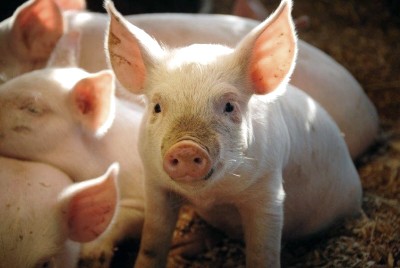
- Porcine: Cardiovascular and gastrointestinal similarity to humans; widely used for laparoscopic and thoracoscopic robotic platforms.
- Ovine / Caprine: Excellent for orthopedic, spinal, and cardiovascular device applications with humanoid organ scale.
- Lapine (Rabbit): Suitable for micro-surgical and ophthalmological robotic applications requiring smaller scale.
Ethical Considerations and Israeli Regulations
3Rs Compliance
The Israeli Animal Welfare Law (Experiments on Animals), 1994, requires avoiding animal experiments if the goals can be achieved by other means, reinforcing the 3Rs principle: Replacement, Reduction, Refining. The Council for Animal Experiments oversees compliance, and official statistics on species, numbers, and severity provide transparent context for ethical decision-making.
Critical Endpoints for Surgical Robot Preclinical Studies

Endpoints define what success looks like. In surgical robot preclinical testing, they fall into safety, performance, and usability categories — each objectively measurable and linked to clinically meaningful outcomes.
????️ Safety Endpoints
- Tissue damage quantification
- Bleeding and perforation rates
- Thermal injury assessment
- Foreign body reactions
⚙️ Performance Endpoints
- Procedure time and task success rate
- Motion accuracy and applied force
- Repeatability across operators
- Precision across anatomical variations
???? Usability Endpoints
- Cognitive load and error rates
- Console interaction effectiveness
- Learning curve evaluation
- Human-robot interaction quality
Our expertise in simulated surgical environments allows for precise measurement of safety endpoints under realistic conditions, with full intraoperative imaging support including C-Arm fluoroscopy, echocardiography, and high-definition laparoscopy.
Measuring Accuracy, Repeatability, and Mechanical Stability
Technical performance of a robotic device preclinical must be quantified with engineering-grade methodologies before any biological testing begins.
Benchtop Protocol Design
Calibrated fixtures, fiducial reference points, and optical or electromagnetic tracking systems quantify deviations from target positions. Statistical envelopes — not single measurements — define performance with rigor.
Load & Stress Testing
Evaluating performance under maximum operational loads, worst-case scenarios, and fatigue cycles ensures mechanical stability across the expected device lifecycle and confirms structural integrity under clinical use conditions.
Drift & Long-Term Stability
Subtle drift over extended periods can compromise clinical use. Monitoring includes environmental influences such as temperature, humidity, and vibration to confirm stability under realistic operating conditions.
Evaluating Device-Tissue Interaction in a Robotic Surgery Animal Model
The interaction between robotic instruments and biological tissue is where engineering meets physiology — and where in-vivo evidence becomes irreplaceable.
Ex-Vivo and Phantom Tissue Characterization
Initial tests on explanted tissues or tissue-mimicking phantoms quantify grasping force, cutting effectiveness, sealing performance, and thermal spread before live-animal exposure — reducing animal use while maximizing data yield.
In-Vivo Assessment
Live animal models reveal real-time bleeding, tissue tearing, charring, healing trajectories, and complication rates that no synthetic model can replicate. Biotech Farm provides comprehensive preclinical research and development services to evaluate these critical device-tissue interactions in a scientifically supportive environment with senior surgical staff and full intraoperative imaging.
“No computer simulation has yet replicated the moment when a robotic grasper meets bleeding, perfused tissue under anesthesia. In-vivo evidence remains the gold standard for tissue interaction endpoints — and the foundation upon which regulators and ethics committees build their confidence.”
— Adir Koreh, CEO, Biotech Farm Ltd.
Software and Control System Safety for Surgical Robots
Surgical robot preclinical testing must scrutinize software and control algorithms with the same rigor applied to hardware. Three areas demand particular attention:
FMEA Analysis
Systematic identification of potential software failures — their causes, effects, and detectability — guides testing priorities and informs risk control measures across the entire control architecture.
Interlocks & Emergency Stops
Safety interlocks, hard stops, and emergency shutdown procedures must be tested under fault conditions — including corrupted sensor inputs and degraded communications — to ensure unintended movements are reliably prevented.
Anomaly Detection & Logging
The system’s ability to detect erroneous sensor data, communication failures, or unexpected inputs is evaluated alongside robust logging architecture that supports post-incident analysis and continuous learning.
IDEAL Framework — Stage 0: The IDEAL framework for surgical innovation explicitly accommodates simulators, cadavers, animal models, and computational modeling at Stage 0 (Pre-IDEAL), making it a natural scaffold for surgical robotics validation programs. A 2023 Nature Medicine analysis applies IDEAL specifically to surgical robotics, while foundational BMJ literature describes how each stage builds a defensible evidence narrative.
Is GLP Compliance Required for Surgical Robot Preclinical Testing?

Good Laboratory Practice (GLP) is not universally mandatory for every preclinical medical device study, in contrast to pharmaceutical safety studies. However, adhering to GLP principles — or equivalent quality systems such as ISO 13485 — is strongly recommended for credibility, traceability, and regulatory acceptance.
The OECD Principles on Good Laboratory Practice define the international standard for ensuring quality and integrity of non-clinical safety data, and reviewers expect to see equivalent rigor in pivotal robotic device studies.
GLP Scope
Governs the quality of non-clinical safety data: study conduct, raw data integrity, chain of custody, and the independence of the quality assurance function from study management.
ISO 13485 Scope
Governs the quality management system of the device manufacturer: design controls, risk management integration, traceability, and corrective action — complementary to, not a substitute for, GLP.
Documenting Preclinical Evidence for Regulatory Submission in Israel
Meticulous documentation transforms data into a defensible submission. A preclinical data package for Israeli and international authorities typically includes the following elements:
- Full study protocol with predefined acceptance criteria
- ISO 14971-compliant risk analysis documentation
- Complete raw data with audit trail and chain of custody
- Pre-specified statistical analyses and results
- Protocol deviations with impact assessment
- Veterinary observations and intraoperative notes
- Histopathology reports (where applicable)
- Final report linking findings to acceptance criteria
The Israeli Ministry of Health oversees clinical trials through Helsinki Committee approvals, underscoring the importance of robust preclinical data before human exposure. State Comptroller reports on the oversight of animal experiments in Israel further emphasize regulation, oversight, and meticulous documentation.
Mapping Business Needs to Preclinical Capabilities
| Business Need | How a Full-Service Facility Supports It |
|---|---|
| Reduce iteration cycles | Integrated bench, phantom, and in-vivo capabilities under one roof |
| Demonstrate regulatory rigor | Documented procedures, transparent collaboration, scientific escort |
| Match device to anatomy | Multiple species — porcine, ovine, caprine, lapine — with humanoid organ scale |
| Capture imaging-rich endpoints | C-Arm fluoroscopy, echocardiography, 4K laparoscopy, OCT, surgical microscope |
| Ethical compliance | 3Rs implementation, animal welfare focus, tender care protocols |
| Adapt to evolving protocols | Tailored study design and interactive brainstorming with experienced staff |
Expected Timelines and Costs for Preclinical Studies of Robotic Devices
Realistic planning is essential. Robotic device preclinical timelines and costs vary significantly with device complexity, chosen models, and testing scope.
⏱ Timeline Factors
- Regulatory approvals for animal studies
- Technical complexity of the device
- Number of iteration cycles required
- Imaging requirements and statistical depth
???? Cost Components
- Facility fees and animal acquisition/care
- Senior surgeons, veterinary staff, anesthesia
- Intraoperative imaging and histopathology
- Data analysis and regulatory consultation
Cost Efficiency Tip: Bundled programs at integrated facilities like Biotech Farm often reduce total cost of ownership versus fragmented vendors. Early engagement with the contract research partner shortens lead times by eliminating sequential vendor negotiations and protocol misalignments.
Common Pitfalls and Reasons for Failure in Robotic Device Preclinical Studies
Anticipating frequent failure modes is itself a form of risk management. Avoiding these pitfalls preserves time, budget, and regulatory standing.
❌ Inadequate Planning
Poorly defined objectives or shallow risk analysis lead to missed critical tests, ambiguous endpoints, and study designs that cannot defend their conclusions to a regulatory reviewer.
❌ Model Mismatch
Selecting an animal model that doesn’t adequately reflect human anatomy or physiology undermines the ability to extrapolate findings confidently to clinical use — undermining the entire investment.
❌ Data Integrity Issues
Incomplete data capture, weak chain-of-custody, or inconsistent reporting are among the most common reasons regulatory reviewers request additional studies — costing months and significant budget.
When Can Animal Models Be Avoided? Bench testing, phantom models, ex-vivo tissue, and computational simulation can address many verification questions — software behavior, kinematic accuracy, control loop stability, and basic mechanical performance — without animal involvement. The Israeli Animal Welfare Law reinforces this principle. Animal models become necessary when bleeding, perfusion, healing, or live tissue mechanics drive the clinical question.
Crafting a Comprehensive Preclinical Test Plan
A well-structured preclinical test plan anchors the entire surgical robot preclinical testing program. It must specify: study objectives and predefined hypotheses; detailed methodology and surgical procedures; imaging protocols and sample size justification; statistical analysis plans; and the regulatory/ethical approval timeline — including animal welfare council submissions in Israel. Building these timelines into the program plan from day one prevents costly schedule slippage.
Future Trends: Simulation and AI in Preclinical Testing
Emerging technologies are reshaping surgical robotics validation. Advanced simulation environments, virtual reality rehearsals, and AI/machine learning models are increasingly integrated into preclinical stages — generating synthetic datasets, predicting failure modes, accelerating iteration, and reducing reliance on physical models.
These approaches do not replace in-vivo evidence for safety-critical questions, but they sharpen the questions asked of biological models and improve overall efficiency of the evidence-generation pipeline. The teams that will win regulatory approval fastest are those that intelligently combine computational, bench, and in-vivo evidence — in the right sequence, for the right endpoints.
AI/ML Failure Prediction
Machine learning models trained on historical device data can identify high-risk failure modes before physical testing begins, directing the test plan toward the most safety-critical scenarios.
VR Surgical Rehearsal
Virtual reality environments enable surgeons to rehearse procedures with the robotic platform before cadaver or in-vivo testing — improving protocol quality and reducing biological model use.
Digital Twin Modeling
Digital twins of surgical anatomy and robotic kinematics allow iterative software and mechanical refinements in silico, compressing the bench phase and reducing the number of in-vivo cycles required.
Ready to Move Your Robotic Device Forward?
What evidence would most accelerate your next regulatory milestone — and which model would generate it most efficiently? Biotech Farm combines a state-of-the-art large animal facility, senior surgical staff, advanced intraoperative imaging, and transparent collaboration to support every phase of robotic device development.
Frequently Asked Questions

This article is intended for informational purposes only and reflects the professional experience and perspectives of the authors. It does not constitute legal, regulatory, or medical advice. Regulatory requirements vary by jurisdiction and device classification — consult qualified regulatory professionals for your specific program.