A medical device sponsor submitted a ninety-day porcine stent study to a European competent authority last winter. The scientific data showed excellent arterial healing and zero thrombosis. Despite these favorable biological results, regulatory reviewers rejected the entire filing during the initial audit. A single technician had failed to document daily balance calibrations in the surgical preparation room during week seven. Because the test facility could not reconstruct instrument accuracy for those dates, two million dollars in research capital evaporated.
Preclinical safety testing requires complete organizational discipline before experimental treatments can enter clinical trials. International regulatory agencies such as the FDA and the EMA do not accept unverified laboratory records or subjective scientific summaries. Following the OECD GLP principles animal studies framework guarantees that all preclinical safety assessments produce reconstructable and legally defensible data. This guide establishes the operational criteria necessary to align animal facilities with global nonclinical safety expectations.
Failed regulatory inspections force biotech programs to repeat lengthy in vivo protocols from scratch. Re-running a GLP study doubles animal usage, strains early budgets, and delays market entry by over a year. Regulatory compliance protects both human trial volunteers and nonclinical animal welfare.
Exclusive Insight: The €410 Million Compliance Dividend
A single GLP-compliant study conducted in an accredited facility — for example, in Israel under the Israel Laboratory Accreditation Authority — can simultaneously satisfy filing requirements for the FDA, the EMA, and Asian regulators. Compliance is not overhead; it is the passport to multiple markets with one dataset.
What Are the OECD GLP Principles for Animal Studies?
The Organisation for Economic Co-operation and Development established these rules to harmonize laboratory safety evaluations across industrial nations. Formally adopted in 1981 and revised in 1997, the framework defines operational governance from initial study planning through final archiving. These principles apply to all nonclinical health and environmental safety studies that support regulatory submissions.
Official guidelines emphasize process control rather than pure scientific discovery, as documented in the OECD Principles on Good Laboratory Practice. While basic academic research explores novel hypotheses, GLP exists to guarantee study credibility. An inspector who visits a testing facility five years after study completion must be able to reconstruct every day of the trial.
The system tracks every environmental temperature, test article dose and animal observation through unbroken documentation.
Why Is GLP Compliance Required for Nonclinical Safety Testing?
Regulatory authorities demand strict compliance when evaluating systemic toxicology, local tolerance and pharmacological safety profiles. A breakthrough therapeutic cannot enter human phase one trials until researchers prove that the candidate molecule or implant will not cause unpredictable organ damage.
Safety assessments depend entirely on the physical integrity of biological test systems. If an animal facility loses temperature control during a twenty-eight-day rodent study, stress responses can alter liver enzyme production and mask compound toxicity. Such uncontrolled external variables invalidate study findings.
Compliance requirements remove ambiguity from regulatory filings. Health authorities must verify that reported animal survival rates reflect genuine biological responses instead of sloppy dosing techniques or hidden protocol deviations.
How Does the OECD Mutual Acceptance of Data System Work?
The Mutual Acceptance of Data system creates a shared regulatory pact among participating nations. Established under an OECD council decision, the agreement mandates that participating countries must accept nonclinical safety data from foreign test facilities if the study meets OECD standards.
This multilateral framework relies on the official Mutual Acceptance of Data System to eliminate repetitive animal testing across borders.
Thirty-eight member states and several non-member adherent nations participate in this mutual recognition program. A single preclinical study conducted in an audited Israeli facility can directly satisfy filing requirements for both the United States FDA and European regulatory agencies.
Will Foreign Regulatory Agencies Accept Domestic Animal Study Data?

Foreign regulatory bodies readily accept domestic data when the testing facility belongs to an officially monitored national compliance program. The Israel Laboratory Accreditation Authority inspects and monitors Israeli test facilities to verify ongoing adherence to international GLP expectations.
Sponsors often assume that foreign agencies prefer domestic clinical research organizations. In reality, regulatory scientists at the FDA evaluate the documentation trail rather than geographic borders. A swine cardiovascular study performed outside North America receives identical treatment if the final report contains full quality assurance declarations.
Administrative rejection occurs only when facilities fail inspection audits or omit critical deviation records. Documented adherence creates instant credibility.
Academic Research Standards Versus OECD GLP Compliance
Academic research prioritizes scientific innovation, flexible protocols and rapid exploration of unproven biological concepts. When a university laboratory notices an unexpected cellular reaction, the lead investigator can modify the protocol that afternoon without prior quality committee approvals.
Regulatory safety testing forbids this procedural fluidity. Under GLP governance, all study activities follow predetermined standard operating procedures that cannot change without signed amendments.
Data recording protocols also diverge sharply. Academic projects often summarize group observations in weekly spreadsheets, whereas GLP protocols require instantaneous recording of individual raw data points. Every observation requires an indelible time stamp, technician initials and explicit physical logs.
Scientific curiosity drives exploratory research, while regulatory accountability governs nonclinical safety suites.
Core OECD GLP Requirements Across Laboratory Operations
The international guidelines establish ten organizational pillars that govern everyday laboratory operations. These requirements mandate qualified personnel and independent quality assurance alongside calibrated apparatus and validated test systems. The framework also requires standard operating procedures and controlled archiving for all generated reports.
The organizational structure must divide authority to prevent conflicts of interest. The test facility manager assigns qualified staff, while the Study Director retains central responsibility for experimental execution. An independent quality assurance unit monitors both parties without participating in hands-on animal procedures.
Documented operational control ensures total study reproducibility. Every piece of hardware, from surgical anesthesia monitors to automated blood gas analyzers, must possess routine calibration logs.
Physical Test Systems and Animal Housing Requirements
Living animal models represent sensitive biological test systems that react strongly to environmental disturbances. Facilities must provide separate housing rooms to isolate species while quarantining incoming cohorts.
Air handling systems must maintain positive pressure differentials and complete twelve to fifteen hourly air changes. Ambient room temperatures for large animals must remain between twenty and twenty-four degrees Celsius, while relative humidity stays within thirty to seventy percent.
Biotech Farm accommodates swine, sheep and rabbits in species-appropriate social pens designed to reduce environmental stress. Minimizing physical stress produces stable baseline physiological metrics during cardiothoracic and orthopedic evaluations. Continuous digital sensors track room climate around the clock, generating traceable logs that feed directly into GLP archive dossiers.
Case Study: The €2M Calibration Gap
A ninety-day porcine stent study showed excellent arterial healing and zero thrombosis — yet the filing was rejected outright. One undocumented week of balance calibrations made instrument accuracy unreconstructable, erasing two million dollars in research capital and forcing a full study repeat.
Lesson: Biological success cannot compensate for broken documentation chains.
Case Study: The Nineteen-Vial Reconciliation
In one recurring audit finding, a surgical team received twenty vials of an injectable biologic but returned records accounting for only nineteen. Auditors immediately classified the entire study as non-compliant — regardless of the scientific quality of the collected data.
Lesson: Test item chain of custody must reconcile to the last vial, every time.
Case Study: The Weekend HVAC Excursion
An HVAC compressor failure over a weekend caused a temperature spike in animal holding quarters. Because the facility logged the excursion immediately, the Study Director formally assessed metabolic impact and preserved study validity — turning a potential rejection into a documented, defensible deviation.
Lesson: Transparent deviation handling protects months of research investment.
Managing Test Item Administration During a Forty-Day Ovine Study
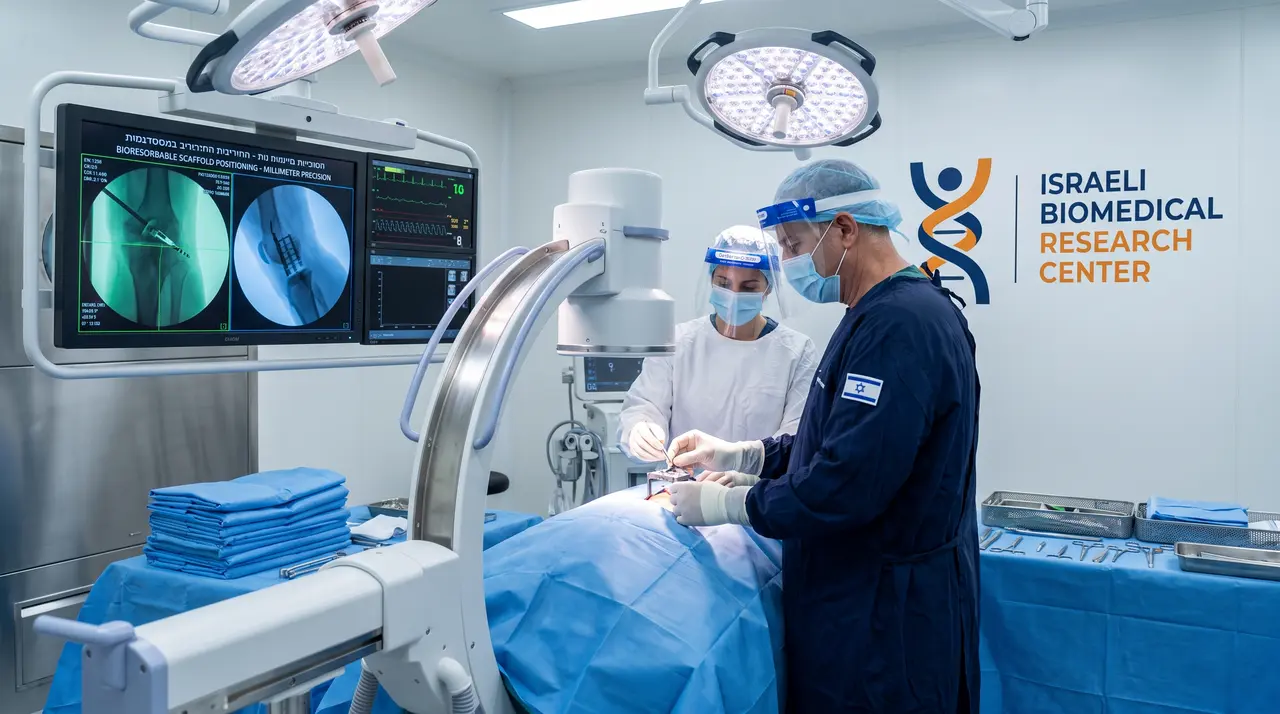
Consider an orthopedic trial evaluating a bioresorbable bone scaffold in twelve adult sheep over a forty-day period. Technicians must log the receipt, purity, batch number and storage temperature of the experimental implants before surgery.
In the operating theater, senior veterinary surgeons access high-resolution imaging to place the implants with sub-millimeter precision. Biotech Farm conducts these procedures in spacious surgical theaters equipped with C-Arm fluoroscopy and high-definition ultrasound systems. Technicians record the exact time of implantation, surgical duration, anesthesia delivery rates and post-operative recovery scores on controlled protocol forms.
Each sheep receives daily clinical health examinations to document wound healing and gait restoration. If an animal exhibits mild lameness on day twelve, attending staff must log veterinary consultations and medication administration contemporaneously.
An inspector who visits a testing facility five years after study completion must be able to reconstruct every single day of the trial.
— OECD Principles on Good Laboratory Practice
Who Holds Legal Accountability for Nonclinical Safety Trial Integrity?
The Study Director acts as the central point of scientific and legal control for the entire investigation. This scientist approves the study protocol, coordinates operational phases, oversees technical personnel and signs off on final conclusions.
Regulatory agencies hold the Study Director personally responsible for protocol adherence and data integrity. Unlike academic research where multiple co-authors share general credit, GLP demands a single responsible individual. If procedural deviations occur during animal dosing, the Study Director must assess the biological impact and sign formal documentation immediately.
The Study Director authors and signs the compliance declaration in the final report. This formal signature certifies that the study followed all national and international GLP standards without unauthorized deviations.
How Quality Assurance Units Monitor Preclinical Study Phases
Regulatory frameworks look clean on paper, but their true test occurs inside the surgical suite when live biological variables clash with rigid administrative mandates. An effective quality assurance unit operates completely separately from practical testing activities. Quality auditors report directly to top management rather than the Study Director to guarantee objective evaluation of study conduct.
The unit conducts three distinct inspection types during an active trial. Facility inspections review building sanitation and equipment readiness, process inspections monitor routine procedures like blood collection, and study audits examine protocol-specific operations. Detailed guidelines on these procedures appear in our Regulatory Compliance overview of Preclinical Research GLP Standards.
Auditors cross-examine every data entry against raw laboratory instruments. When technicians document animal weights, quality assurance verifies that the scale calibration certificate remained valid at that exact minute. Quality assurance issues a signed statement verifying report accuracy before regulatory submission.
Methodology: The GLP Study Lifecycle
A compliant nonclinical study follows a documented, auditable sequence from start to finish:
- Protocol development: statistical justification of animal numbers, observation schedules and endpoints, plus signed approvals from the Study Director and facility management before any animal enters the facility.
- Test item characterization: receipt, purity, batch number and storage temperature logging with dual-verification chain of custody.
- In-life phase: contemporaneous ALCOA-compliant raw data capture, daily clinical examinations, and immediate deviation reporting within twenty-four hours.
- Quality assurance audit: facility, process and study-specific inspections cross-examined against raw instrument records.
- Final report and archiving: Study Director compliance declaration, then multi-decade retention of records, tissue specimens and slides in restricted and fire-protected storage.
What Must an Animal Study Protocol Contain Before Launch?
A compliant study plan serves as the operational blueprint for the entire research project. The protocol defines the scientific rationale and experimental design along with animal species selection, dosing methods and intended sacrifice intervals before any animal enters the facility.
Study plans must justify animal numbers through statistical power analysis to satisfy both scientific validity and ethical reduction goals. The document specifies detailed observation schedules, sample collection volumes, clinical chemistry panels and terminal histopathology endpoints.
Every study protocol requires signed approvals from both the Study Director and testing facility management. If an ongoing surgical trial requires a dosage modification, the team must execute a formal written amendment before implementing changes. Verbal instructions carry zero regulatory weight during safety assessments.
Defining Raw Data and ALCOA Standards in Surgical Suites
Raw data includes every handwritten log and automated digital recording generated during nonclinical testing. The OECD guidelines establish strict data protection expectations in the OECD GLP Data Integrity guidance.
Under the ALCOA framework, data must remain attributable and legible while being recorded contemporaneously and accurately.
Automated surgical monitoring systems capture high-definition physiological variables during acute and chronic procedures. Biotech Farm equips its operating facilities with 4K laparoscopic towers and digital imaging stations that generate tamper-proof electronic records. If an operator corrects an entry on a printed anesthesia record, they must draw a single strike-through line, state the reason and add their initials.
Operational Criteria Mapped to Regulatory Execution
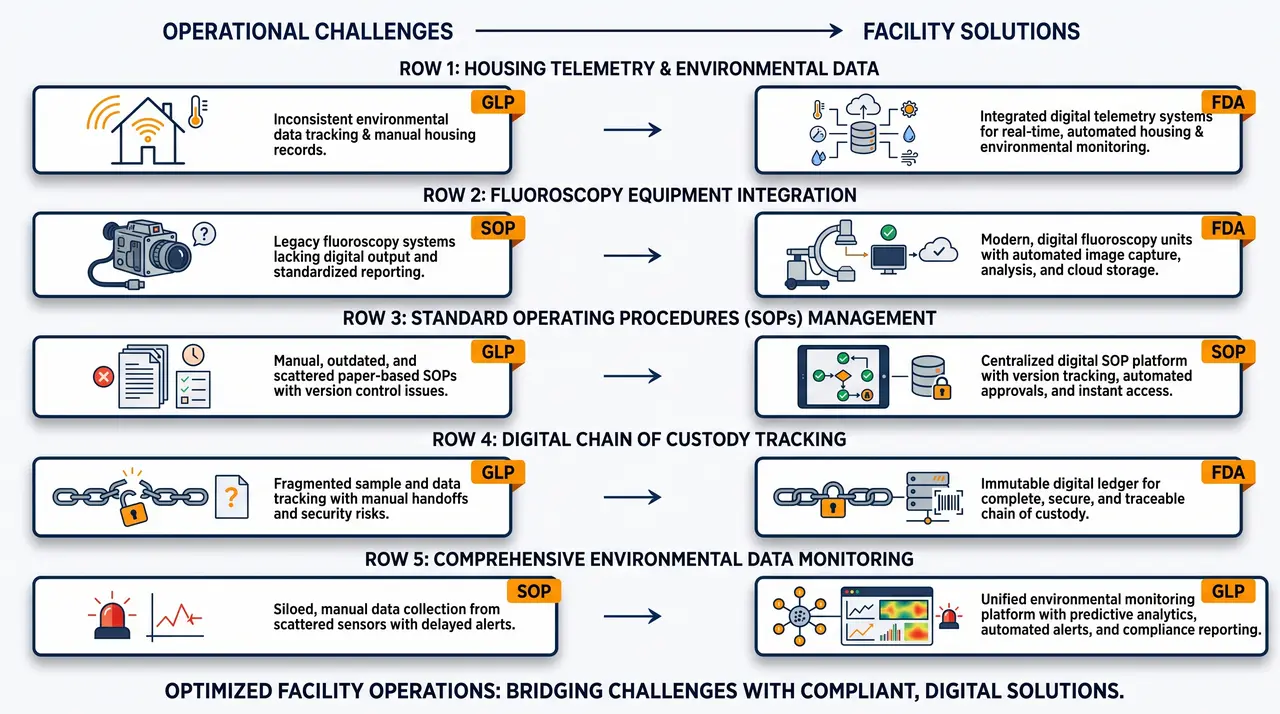
Aligning daily preclinical research with international GLP expectations requires specific operational controls across animal housing, surgical procedures and quality documentation.
| Operational Challenge | OECD GLP Mandate | Practical Facility Execution |
|---|---|---|
| Physiological stress skewing safety endpoints | Controlled environmental housing and acclimatization | Social housing pens with baseline telemetry and twenty-one day conditioning periods |
| Accurate surgical device placement | Calibrated apparatus and validated procedural methods | Advanced fluoroscopy with C-Arm systems and real-time contrast tracking |
| Inter-operator measurement variability | Approved standard operating procedures and trained staff | Detailed procedural manuals with biannual technical competency re-evaluations |
| Traceability of experimental therapeutic doses | Rigorous test item chain of custody and characterization | Digital inventory tracking with restricted electronic access and dual verification |
| Audit trail vulnerability for electronic data | Complete raw data security and system validation | Automated environmental monitoring systems with real-time discrepancy alerts |
Common GLP Audit Findings and Inspection Deviations
Regulatory inspection reports frequently cite preventable administrative failures rather than complex scientific errors. Common deviations include missing equipment maintenance records, undocumented training files and late protocol deviation sign-offs.
A recurring finding involves uncontrolled environmental drifts in animal holding quarters. When an HVAC compressor fails over a weekend and causes a temperature spike, facilities must record the excursion immediately. The Study Director must formally evaluate whether that heat stress affected animal metabolism or test item tolerability.
Another common error is inadequate test item reconciliation. If the surgical team receives twenty vials of an injectable biologic but returns records for nineteen, auditors classify the study as non-compliant. Thorough documentation prevents regulatory inspectors from invalidating months of laboratory research.
Warning: The Cost of a Failed Inspection
A rejected GLP filing means re-running the entire in vivo protocol from scratch — doubling animal usage, straining early-stage budgets, and delaying market entry by over a year. In the porcine stent case above, a single week of missing calibration logs destroyed two million dollars in research capital. Audit readiness must be built into daily operations, not bolted on before submission.
How Teams Manage Protocol Deviations and Amendments During Active Trials
Preclinical safety studies encounter real-world unpredictability when managing live biological systems. The OECD framework provides structured mechanisms to handle both planned modifications and unexpected procedural deviations without compromising study validity.
Amendments represent planned modifications approved before execution. For example, if preliminary pharmacokinetic curves suggest adding an extra blood sampling time point on day thirty, the Study Director authors an amendment justifying the new schedule.
Deviations represent unplanned departures from established protocols or operating procedures. If a power outage delays an automated hematology run by four hours, staff must file a deviation report within twenty-four hours. The Study Director evaluates data risks, while quality assurance tracks corrective actions to prevent recurrence. Documented transparency preserves trial legitimacy in the eyes of regulatory authorities.
Document Retention Rules and Multi-Decade Archive Requirements
The final phase of any nonclinical study involves transferring all physical records, biological specimens and electronic data into long-term storage. Detailed specifications for storage security appear in the OECD GLP Archives guidance document.
Archived materials include the approved protocol alongside wet tissue specimens, histological slides and correspondence files. Regulators frequently inspect these files ten to twenty years after drug commercialization to investigate unexpected post-market clinical findings.
Access to archive rooms remains strictly restricted to designated archive personnel. Storage environments must maintain fire-suppression systems, humidity controls and indexed cataloging databases. If an auditor cannot retrieve a specific tissue slide within two hours during an on-site inspection, the study archive system fails compliance criteria.
Balancing Ethical Veterinary Care With Formal Regulatory Compliance
Strict regulatory procedures must never compromise humane animal treatment or veterinary ethics. High ethical standards and rigorous scientific compliance reinforce each other throughout in vivo safety trials.
The principles of replacement, reduction and refinement guide study design and animal numbers. Proper acclimatization, gentle handling and positive social interaction directly benefit study data by eliminating physiological stress artifacts.
Biotech Farm maintains an ethical care philosophy that combines close veterinary supervision with modern animal housing. Social groups live in clean, spacious enclosures where gentle interaction lowers blood cortisol levels. Calm animals demonstrate predictable drug clearance rates, reduced cardiovascular volatility and reliable surgical wound repair. Compassionate animal welfare produces reproducible nonclinical data that easily satisfies global regulators.
Key Takeaway: Welfare and Compliance Are Allies
Calm, well-housed animals show predictable drug clearance, stable cardiovascular metrics and reliable wound repair — exactly the data quality regulators demand. Humane treatment is not just an ethical obligation; it is a scientific control variable that directly strengthens your filing.
Frequently Asked Questions About OECD GLP Animal Studies
These concise answers address common questions regarding regulatory compliance, international data acceptance and study execution in preclinical animal research.
Planning Your Upcoming Regulatory Animal Study
International reviewers examine study documentation with uncompromising precision because nonclinical results establish first-in-human dosing margins. Selecting a testing facility with experienced surgical teams, advanced imaging equipment and an established GLP quality framework ensures your safety data survives rigorous international review.
Biotech Farm provides research teams with comprehensive scientific guidance, modern surgical suites and species-specific housing that prioritize both data integrity and animal welfare. Are you ready to design a compliant nonclinical study that satisfies international regulators without procedural friction?
Connect with the preclinical specialists at Biotech Farm to discuss your study protocols, model requirements and project timelines today.