Minipig vs Domestic Pig Research: How to Choose a Pig Model for Preclinical Studies
Toxicology, pharmacokinetics, device implantation and surgical modeling all point to the pig, but they rarely point to the same pig. Selecting between a purpose-bred minipig and a large domestic pig is one of the earliest and most consequential decisions in a preclinical program, and it shapes dosing feasibility, study duration, imaging strategy, histopathology interpretation and the credibility of your regulatory submission. Drawing on more than three decades of experience leading and managing large animal research, this guide lays out a practical decision framework built for scientists who need to defend a species choice under regulatory review, not just justify it internally.
Exclusive Insight
A structured species choice starts from the endpoints, not the animal. Ask what must be measured, at what anatomical scale, over what duration, and with what degree of biological stability. Only then does the question of minipig versus domestic pig become answerable — and everything downstream, from anesthesia planning to histopathology reference data, follows from that single decision.
Choosing a Pig Model Is a Design Decision, Not a Preference
Teams often arrive with the species already chosen, usually because a colleague used it, a CRO quoted it, or a prior program succeeded with it. That shortcut works until the protocol meets reality: a compound supply that cannot cover 60 kg animals, a chronic study in which body weight doubles mid-course, or an implant designed for a 6 mm vessel placed into anatomy that no longer matches at week 12.
A structured choice starts from the endpoints. Ask what must be measured, at what anatomical scale, over what duration, and with what degree of biological stability. Only then does the question of minipig versus domestic pig become answerable. Everything downstream, from anesthesia planning and blood sampling schedules to histopathology reference data, follows from that single decision, which is why it deserves scientific scrutiny rather than habit.
What Actually Separates a Minipig From a Domestic Pig?
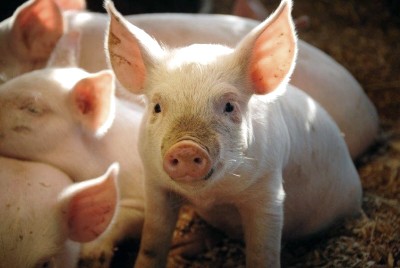
Minipigs are purpose-bred lines developed through decades of selective breeding for reduced mature size, predictable conformation, docile temperament and defined health status. They are produced in controlled colonies for research, with documented genetic background and husbandry history. Domestic pigs are agricultural animals selected for rapid weight gain and carcass yield, typically sourced from commercial production, with size and growth rate varying by breed, farm and age at delivery.
The distinction is therefore genetic background, growth trajectory, mature body weight and intended purpose. A domestic pig at 30 kg and a minipig at 30 kg are not interchangeable: one is a juvenile still on a steep growth curve, the other may be an adult with a stable physiological baseline. As reviews of minipig models describe, minipigs cover adulthood and long-term work, while domestic pigs cover infancy and adolescence.
Scenario: A Nine-Month Chronic Toxicology Program
Consider a small-molecule candidate requiring a 39-week non-rodent toxicology study with repeated oral dosing, serial pharmacokinetic sampling, ophthalmic examinations and terminal histopathology. Start with domestic pigs at 25 kg and you will finish with animals approaching 150 kg or more. Dose volumes scale accordingly, compound demand escalates, restraint becomes hazardous, imaging tables reach their limits and organ weights shift for reasons unrelated to the test article.
Run the same protocol in adult minipigs and body weight remains comparatively stable, compound requirements stay proportionate, handling remains a two-person task, and control animals provide a meaningful physiological baseline across the entire dosing period. This is the classic case in which the minipig is not merely convenient but scientifically superior, because it removes a confounder rather than accommodating it.
Chronic Toxicology: Minipig Wins
39-week repeat-dose study with stable adult weight, proportionate compound use, and a two-person handling protocol throughout dosing.
Acute Device Delivery: Domestic Pig Wins
Catheter-based cardiovascular systems and large orthopedic implants require adult human-scale vessels and bone geometry that only large domestic pigs reliably provide.
Dermal & Wound Healing: Minipig Wins
Göttingen and Sinclair lines provide stable skin architecture and repeatable site standardization across long observation windows.
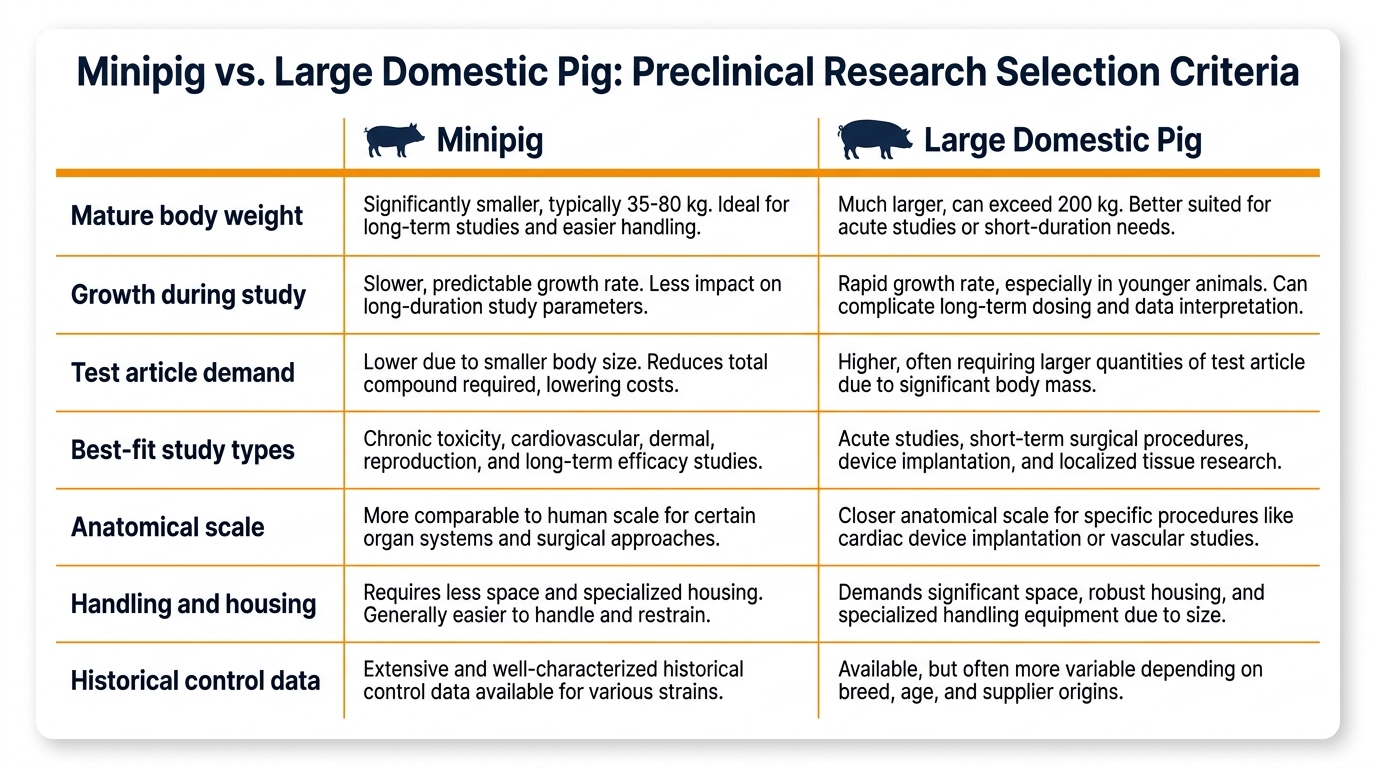
Side-by-Side Selection Criteria for Pig Models
| Design factor | Minipig (Göttingen, Sinclair, Yucatan) | Large domestic pig |
|---|---|---|
| Mature body weight | 25–70 kg depending on line and age | 100–250 kg and still increasing |
| Growth during study | Slow, predictable, near-plateau in adults | Rapid, a major confounder beyond 4–8 weeks |
| Test article demand | Lower absolute quantity per dose | High, sometimes prohibitive for novel compounds |
| Best-fit study types | Chronic toxicology, PK/PD, dermal, ocular, long-term implants | Acute surgery, human-scale device delivery, high-volume tissue collection |
| Anatomical scale | Human-relevant for many structures, smaller vessels and cavities | Closest match to adult human dimensions |
| Handling and housing | Manageable pens, routine restraint, standard imaging | Reinforced housing, more personnel, larger equipment |
| Historical control data | Extensive for established lines | Variable, breed and source dependent |
When the Large Domestic Pig Wins the Argument
Scale sometimes cannot be negotiated. Transcatheter cardiovascular devices, large orthopedic implants, bariatric and hepatobiliary surgical models, and procedures requiring femoral access with clinically sized introducers all demand vessel diameters, chamber volumes and working space that adult minipigs may not provide. In these cases the domestic pig is the honest choice, because a device tested in undersized anatomy generates data that will not translate.
Large pigs also serve studies requiring substantial tissue or blood volumes for metabolic profiling, immunological assays or bioanalytical method development, and they remain the standard platform for surgical training and technique validation. Short acute or subacute studies neutralize the growth-rate disadvantage entirely: over days or two to three weeks, rapid growth is irrelevant while human-scale anatomy is decisive.
How Body Weight Rewrites the Protocol: Dosing, Sampling and Imaging
Compound requirement scales linearly with body weight, and for a first-in-class biologic or a costly synthesis this alone can determine feasibility. FDA-referenced discussions of pig models note explicitly that large body size requires comparably large amounts of test article, a constraint that has ended more programs than any pathology finding.
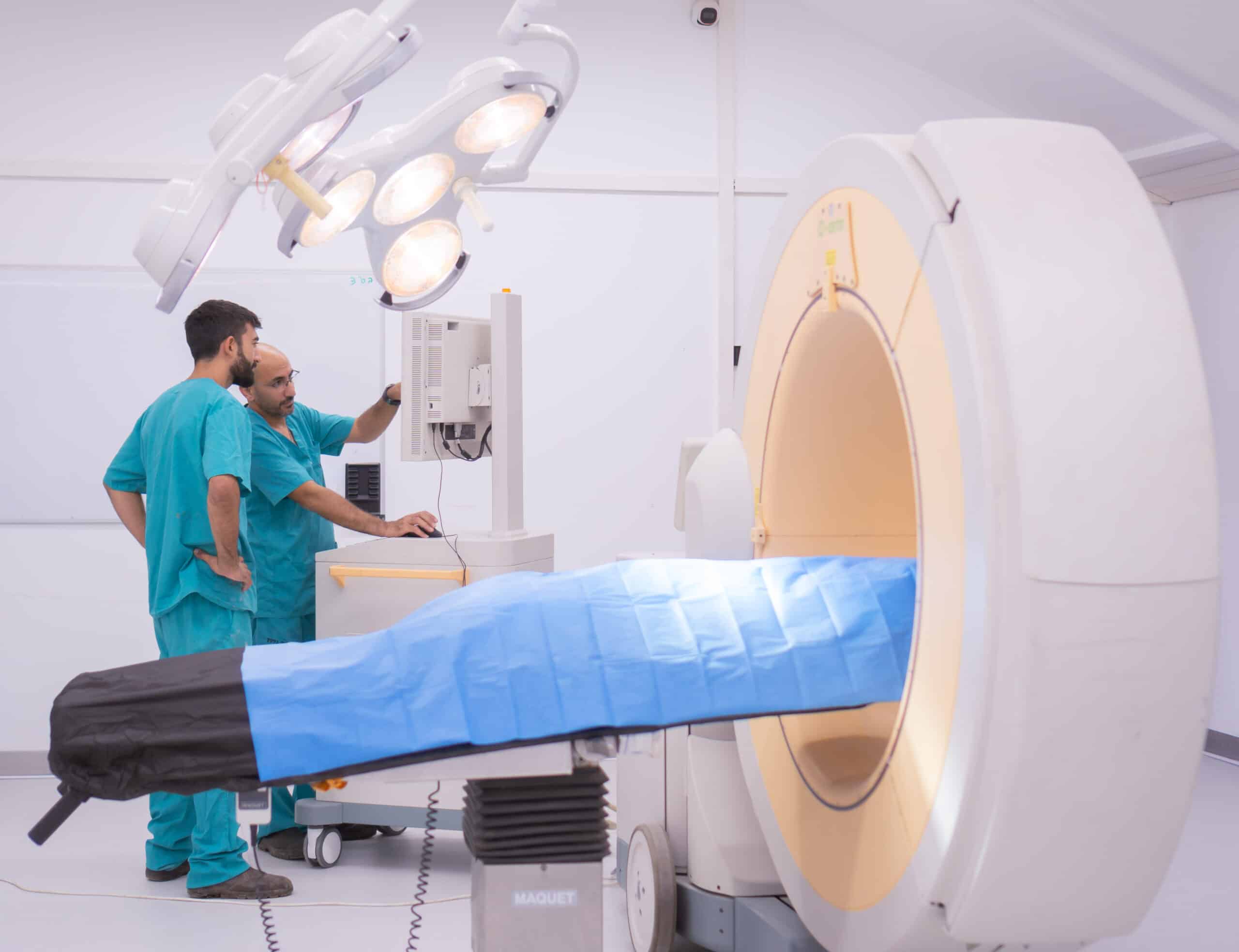
Blood sampling follows the same logic in reverse. Minipigs support frequent serial draws within welfare limits when total volume is planned carefully, while domestic pigs yield generous single samples but demand more restraint and staff per timepoint. Imaging is a third pressure point: CT, MRI, fluoroscopy and echocardiography accommodate minipigs comfortably, whereas very large pigs may exceed gantry apertures or table weight limits. Anesthesia circuits, ventilator settings and recovery space all shift accordingly, and these logistics belong in the protocol from day one, not in a mid-study amendment.
Growth Curves Confound Long Studies: Here Is Why
A domestic pig can gain 0.7–1.0 kg per day under production feeding. Across a 13-week study that is a transformation, not a fluctuation. Organ weights, body composition, cardiac output, hepatic enzyme activity and renal clearance all shift with growth, which means control animals are moving targets and mg/kg dosing requires continuous recalculation.
Minipigs, by contrast, follow a slower and more predictable growth curve and reach a comparatively stable adult weight, which is precisely why research literature repeatedly cites the slower growth trajectory as a core advantage of miniature swine over domestic swine for biomedical modeling. Stability translates into cleaner variance, more interpretable clinical pathology trends and fewer arguments during data review about whether an effect reflects pharmacology or simply an animal that grew.
Budget Reality: Where the Money Actually Goes
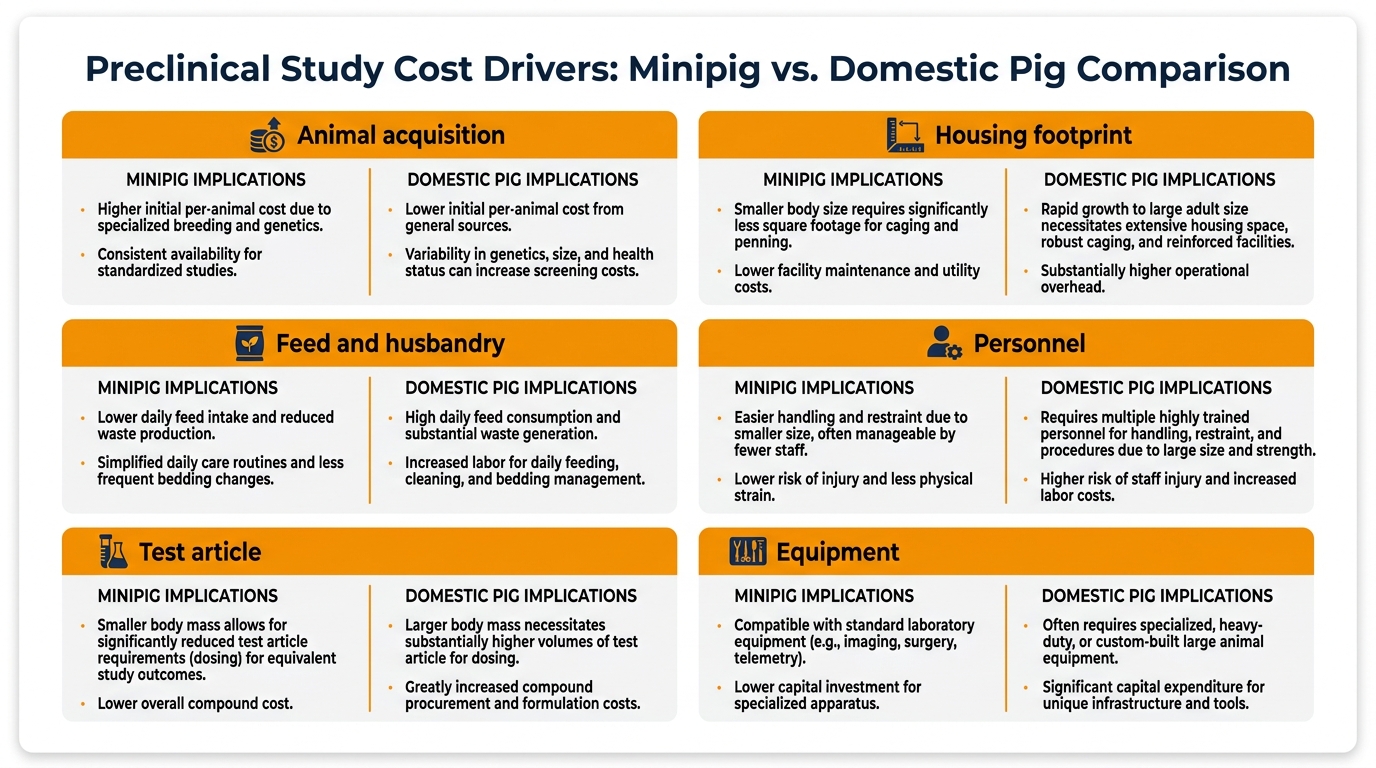
| Cost driver | Minipig implications | Domestic pig implications |
|---|---|---|
| Animal acquisition | Higher unit price for defined-health, purpose-bred stock | Lower unit price from commercial sources |
| Housing footprint | Smaller pens, more animals per unit area | Large reinforced pens, higher facility load |
| Feed and husbandry | Restricted feeding, lower daily consumption | High intake, rising with body mass |
| Personnel | Fewer handlers per procedure, faster throughput | More staff and lifting equipment per manipulation |
| Test article | Often the decisive saving in chronic studies | Can dominate the entire study budget |
| Equipment | Standard imaging, anesthesia and surgical kit | Larger tables, custom restraint, heavier consumables |
The headline price per animal is misleading. Model the full lifetime cost of the study, including compound, and the ranking frequently reverses, a point emphasized in discussions of miniature swine in nonclinical work.
Metabolism and Drug-Metabolizing Enzymes: Breed Differences Matter
Pigs are not a single pharmacological entity. Cytochrome P450 isoform expression, phase II conjugation capacity and transporter profiles differ between domestic breeds and minipig lines, and even among minipig strains. These differences influence absorption, distribution, metabolism and excretion, and therefore systemic exposure, metabolite profiles and the toxicities you will or will not observe.
The practical consequence is that species selection must be justified against the compound’s known or predicted human metabolism, not against convenience. Where in vitro cross-species comparisons of hepatocytes or microsomes are available, they should precede the in vivo commitment. Where they are not, a small pilot exposure study in the candidate model is cheaper than discovering a metabolic mismatch in week 20 of a pivotal study. Reviewers expect this reasoning to be documented, and its absence is a recurring cause of avoidable questions.
Common Mistakes in Interpreting Background Findings
Background findings are spontaneous lesions and physiological variations present in untreated animals: age-related, strain-specific, dietary or environmental in origin. In pigs these can include focal hepatic inflammatory foci, renal tubular changes, mild myocardial fibrosis, gastric alterations and dermal findings associated with housing surfaces.
The recurring error is treating any histopathological observation in treated animals as test-article related, without checking whether it appears at similar incidence in concurrent and historical controls. Both errors are avoided by using a model with a documented background pathology profile and by involving the study pathologist in species selection rather than only at the terminal phase.
Göttingen Minipig: Why It Dominates Regulatory Packages
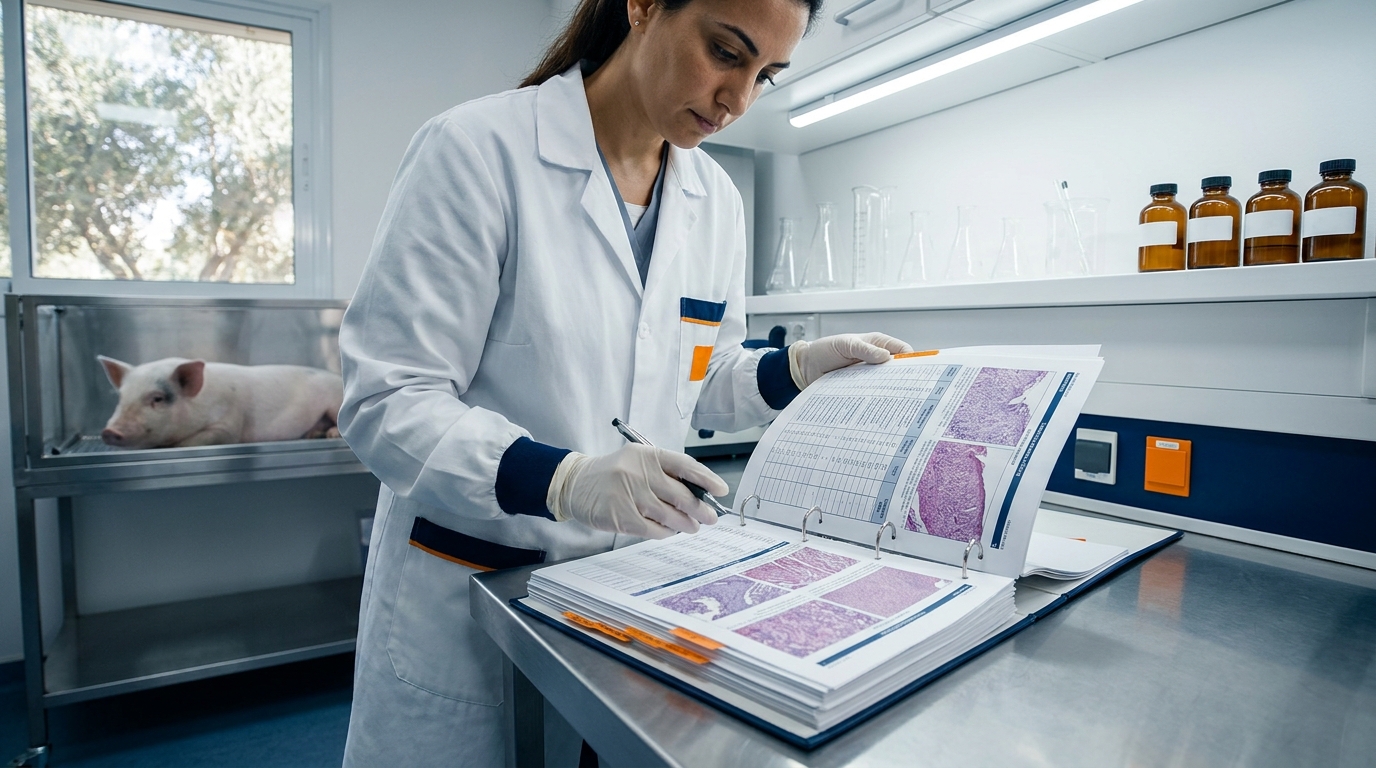
The Göttingen minipig was developed in Germany from a defined breeding program and is now the most widely used minipig line in Europe and a leading choice in North America and Japan. Its appeal rests on three pillars: small and uniform adult size, controlled breeding with documented genetic and health status, and an unusually deep body of published data and historical control values.
That data depth matters at submission. When a reviewer asks whether a finding is compound-related, the ability to reference an established control database for the same line shortens the discussion considerably. The line is used across general toxicology, safety pharmacology, PK/PD, reproductive toxicology, dermal work and ophthalmic biodistribution studies, and the sequencing of its genome has further supported target-presence and sequence-homology assessments during species selection.
Sinclair, Yucatan and Other Lines: A Note on Strain Choice
Minipig selection does not stop at “minipig”. Sinclair minipigs, developed in the United States, are somewhat larger than Göttingen animals and carry a strong reputation in dermatological research, including pigmentation-related models. Yucatan and Hormel lines are also established in North American practice, and Clown minipigs appear in Japanese work.
Each line brings its own adult weight range, temperament, skin characteristics and background pathology profile. Swapping lines mid-program invalidates the historical control comparison and can shift dosing feasibility if mature weights differ substantially. The practical rule is to fix the line early, confirm supply continuity for the full study duration including any recovery or extension arms, and document the rationale in the protocol so that the strain choice reads as deliberate rather than opportunistic.
How Regulators Read Your Species Justification
Both minipigs and domestic pigs are accepted non-rodent species for nonclinical safety assessment, and neither carries automatic approval. Regulatory expectations under ICH-aligned frameworks center on pharmacological and metabolic relevance to humans, appropriateness of the administration route, adequacy of the anatomical model for the intended clinical use, and availability of interpretable comparative data.
A defensible justification therefore addresses target expression or pharmacological responsiveness in the chosen species, comparative metabolism, practical feasibility including compound supply, and the availability of historical control data. Minipigs are frequently favored for chronic dosing programs on manageability grounds, and contract research organizations have run minipig toxicology programs for decades, as reflected in established minipig toxicology service offerings. State the reasoning explicitly; silence invites questions.
A species choice that cannot be explained in one paragraph to a reviewer is a species choice that was never really made — it was inherited. Every protocol we build starts with the endpoint, not the animal on hand. — Adir Koreh, CEO, Biotech Farm Ltd.
Working Under Israeli Regulation: The Council for Animal Experimentation
Research using pigs in Israel operates under the Animal Welfare Law (Experiments on Animals), 1994, with oversight by the Council for Animal Experimentation under the Ministry of Health. Every study requires an approved application describing objectives, experimental design, species and numbers, anticipated severity, analgesia and anesthesia plans, humane endpoints and personnel qualifications.
The 3Rs framework of Replacement, Reduction and Refinement is not decorative language here; it is the standard against which the application is assessed. Working within a facility that routinely prepares and maintains these approvals, keeps documentation audit-ready and understands local timelines removes a substantial administrative burden from sponsors, particularly for international teams unfamiliar with the Israeli process.
Pitfalls That Derail Minipig Toxicology Programs
- Background lesions misread as treatment effects — addressed by strain-matched historical controls.
- Dose volume ceilings — per-site and per-kilogram limits can make the intended high dose physically undeliverable.
- Immunogenicity — responses to specific biotherapeutics can diverge, eroding exposure in later dosing weeks.
- The cost illusion — a superficial per-animal comparison favors domestic pigs until compound, housing, labor and duration enter the model.
Device Testing: Matching Anatomy to Implant Scale
Medical device studies expose species choice more brutally than pharmaceutical work, because a mismatch is visible on the first fluoroscopic image. The question is whether the device interacts with anatomy at adult human scale.
Acute Delivery and Deployment Feasibility
For catheter-based cardiovascular systems, structural heart devices and large orthopedic implants, domestic pigs supply the vessel diameters, chamber dimensions and bone geometry required for realistic delivery, deployment and access. Acute procedures also avoid the growth confounder entirely, since the study concludes before body weight changes matter.
Chronic Implantation and Tissue Integration
Once the endpoint is healing response, endothelialization, osseointegration or long-term device durability, the calculus inverts. In a rapidly growing pig, surrounding tissue expands around a fixed-size implant, distorting apposition and biomechanics. Adult minipigs provide the stable anatomical environment that chronic implant studies require, which is why long-term device work so often migrates to them.
Dermal and Wound-Healing Endpoints: The Minipig’s Strongest Card
Pig skin is the closest routinely available analogue to human skin. Epidermal and dermal thickness, dermal-epidermal ratio, sparse hair coverage, adnexal structure and barrier function align well with human tissue, and permeability characteristics are frequently comparable enough to support transdermal absorption and local tolerance assessments.
Wound-healing research benefits particularly, since porcine repair proceeds through re-epithelialization and contraction patterns closer to human healing than rodent models allow. Göttingen minipigs are established in this space, and Sinclair animals are often selected where pigmentation biology is relevant. Randomizing treatment sites across anatomical regions is a simple refinement that materially improves data quality.
Ophthalmic Studies in Pigs: Endpoints You Can Repeat
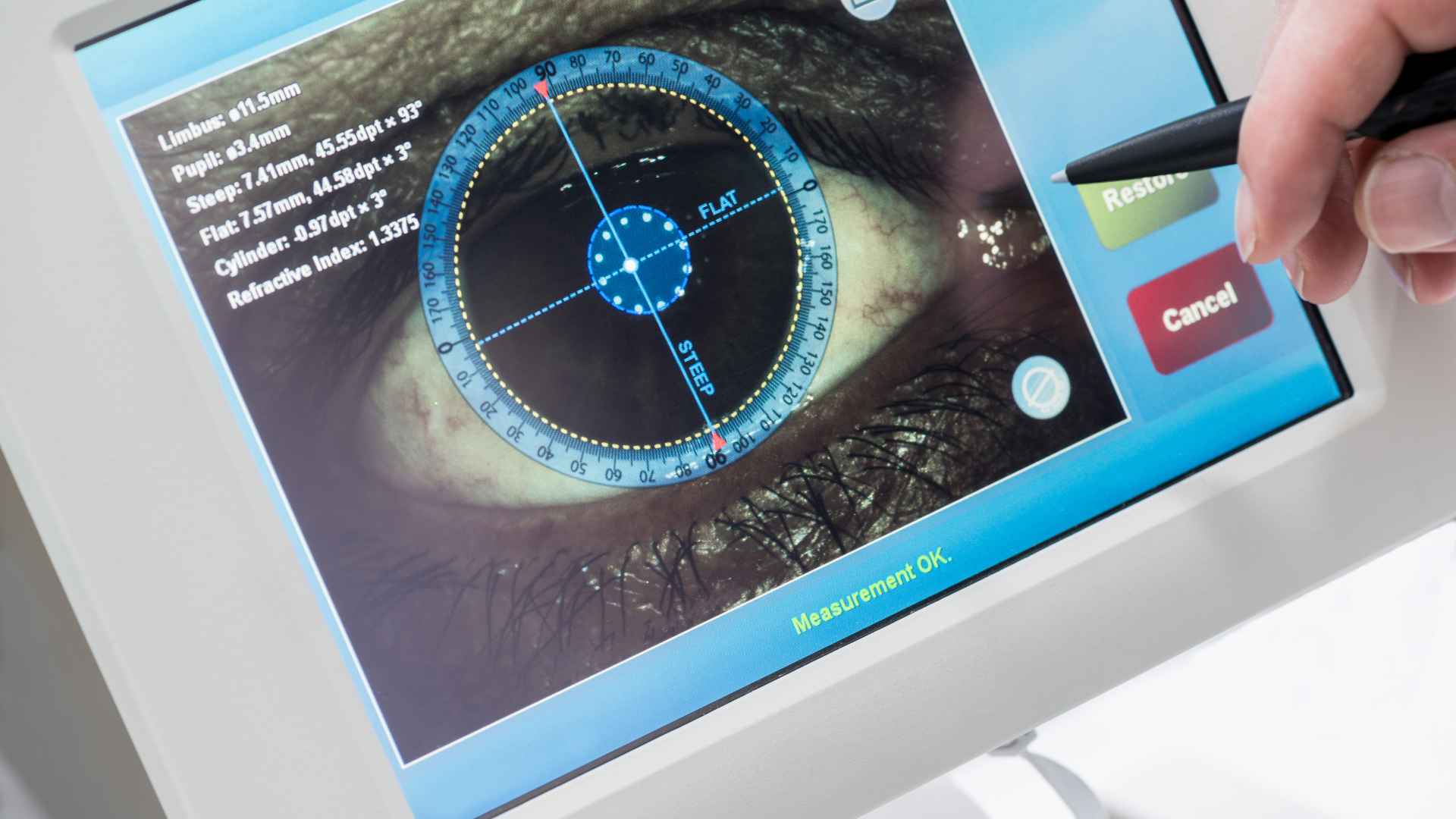
The porcine eye shares meaningful features with the human eye, including a holangiotic retinal vasculature and a cone-containing visual streak. Minipigs are especially practical because their size permits repeated non-invasive assessment under anesthesia using OCT, electroretinography, fundus photography, tonometry and slit-lamp examination across multiple timepoints in the same animal, reducing group sizes in line with the 3Rs.
Metrics and Checks Before You Lock the Protocol
Feasibility Review Checklist
- Projected body weight at every study milestone, not only at delivery.
- Total compound demand recalculated against actual supply with a contingency margin.
- Deliverability of the intended dose volume by the chosen route at the highest dose level.
- Cumulative blood withdrawal against welfare limits for the full sampling matrix.
- Imaging equipment tolerances for maximum projected weight and girth.
- Historical control dataset matched to strain, age and source colony.
- Animal availability confirmed for the entire program, including recovery groups.
Business Need Versus What a Large Animal Facility Delivers
| Research need | How an equipped facility supports it in practice |
|---|---|
| Deciding between minipig and domestic pig | Scientific escort from protocol concept onward, matching model, endpoints and budget before resources are committed |
| Interventional and device procedures | Surgical suites with C-Arm fluoroscopy, cardiac ultrasound, OCT and 4K laparoscopic towers under one roof |
| Long-term and chronic studies | Spacious housing with welfare-focused husbandry, keeping animals calm and physiologically stable across months |
| Regulatory compliance in Israel | Familiarity with Council for Animal Experimentation requirements and GLP-oriented documentation |
| Transparency for sponsors and investors | Documented procedures, senior surgical staff and open collaboration throughout execution and reporting |
Model choice is only half the equation; execution capacity determines whether the chosen model actually delivers. Running cardiology, orthopedics, ophthalmology, metabolic, wound-healing and respiratory platforms within a single facility means a program that starts as a pilot in one platform can extend into another without requalifying a new site or re-establishing husbandry baselines.
For teams based in Israel, proximity also matters more than it appears on a budget line. Direct access to the surgical suite, the ability to observe procedures, and short feedback loops between the sponsor’s engineers and the surgical crew accelerate iteration on device prototypes in a way that remote outsourcing rarely matches. Combined with a genuine commitment to animal well-being and the 3Rs, this produces data that is both defensible and obtained responsibly, for the benefit of mankind and animals.
Frequently Asked Questions
Which Pig Model Fits the Study You Are About to Run?
If you are weighing a minipig against a large domestic pig for a toxicology program, a pharmacokinetic study, a device implantation model or a complex surgical procedure, the decision is worth an hour of scientific discussion before it becomes a line in a protocol. Our team combines senior surgical expertise, a fully equipped large animal facility and a collaborative approach to study design, with animal welfare and transparency at the center of everything we do.