Pig model diabetes research demands more than a protocol — it demands a facility where 30+ years of large-animal expertise, surgical capability, and disciplined phenotyping converge. At BIOTECH FARM Ltd., our team — led by Adir Koreh, with over 20 years of hands-on experience in animal model setup and a veterinary team working together for more than a decade — has guided diabetes induction studies from first dose to final data set. This guide distills that experience into practical, actionable knowledge for preclinical teams.
Exclusive Insight: The single most common reason pig diabetes studies fail is not the induction method — it is the absence of predefined success criteria. Fasting glucose thresholds, post-load targets, and exclusion rules must be locked into the protocol before the first animal is dosed. Teams that skip this step end up deciding ad hoc what counts as a “diabetic” animal, and their data becomes uninterpretable.
What Is Pig Model Diabetes Research?
Pig model diabetes research refers to the use of pigs, including minipigs, as preclinical models for studying diabetes, insulin resistance, and metabolic syndrome. The goal is to generate data that closely mirrors human physiology, so that findings from the preclinical phase translate more reliably into clinical outcomes. Pigs have earned a central place in this field because their pancreatic architecture, glucose metabolism, organ size, and cardiovascular physiology resemble those of humans to a degree that small laboratory animals cannot match. Researchers rely on these models for mechanistic studies, efficacy and safety testing, pharmacology, medical device development, and complex metabolic assessments that demand repeated blood sampling over long periods.
Why Do Researchers Choose Pigs Over Rodents?
When physiological relevance, organ size, repeated sampling, and human-like clinical parameters are critical, pigs offer a significant translational advantage over rodents. Rodents remain indispensable for screening, but they do not always replicate the full picture of type 2 diabetes, particularly the combination of insulin resistance with progressive beta-cell failure that defines the human disease. A widely cited review in Nature Reviews Endocrinology concluded that no single animal model fully mimics human diabetes, and that large animals occupy an increasingly important niche precisely because they capture multi-system aspects of the disease. Pigs also permit sophisticated protocols such as hyperinsulinemic-euglycemic clamps and intravenous glucose tolerance tests with frequent, long-term sampling, as explored in detail in our section on swine models in biomedical research.
Porcine Diabetes Model vs. Swine Metabolic Disease Model: What Is the Difference?
The terms are often used interchangeably, but they describe different research scopes. A porcine diabetes model specifically focuses on hyperglycemia and insulin deficiency or beta-cell failure. A swine metabolic disease model, by contrast, encompasses a broader bundle of conditions: obesity, dyslipidemia, fatty liver disease, hypertension, and other cardio-metabolic complications. Notably, metabolic syndrome in pigs can exhibit insulin resistance well before overt diabetes appears, making these models valuable for studying the pre-diabetic state. For a more comprehensive understanding, explore our dedicated section on Metabolic Disease Models.
How Is Diabetes Induced in Pigs?
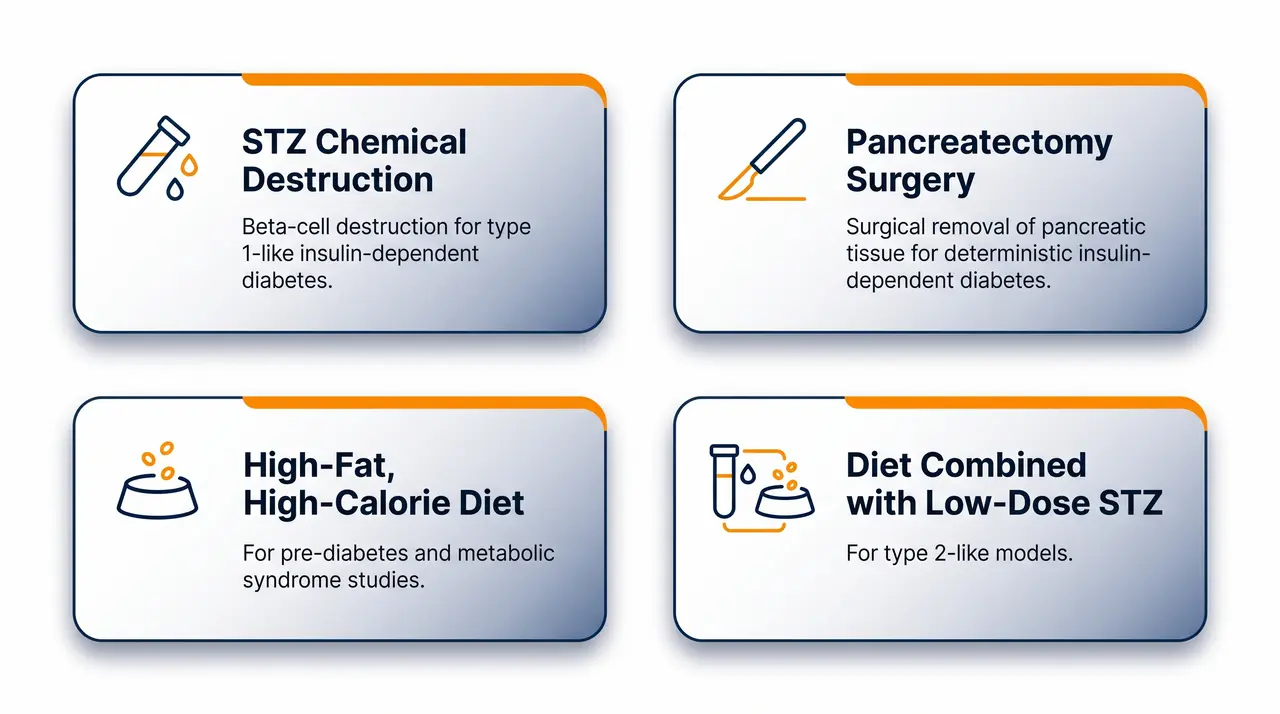
Induced diabetes models in pigs are typically created either by chemically damaging pancreatic beta cells or through surgical removal of pancreatic tissue, with the aim of establishing stable hyperglycemia. Each route produces a different disease profile, and the choice shapes the entire experimental design, from animal numbers to sampling schedules and welfare monitoring. Genetic approaches add a third option, though they require specialized breeding programs and longer lead times.
Chemical Induction with Streptozotocin
Streptozotocin has been used for decades to induce insulin-dependent diabetes in pigs by selectively destroying pancreatic beta cells. Classic studies established that STZ administration in swine produces sustained hyperglycemia with reduced insulin and C-peptide responses, closely mimicking type 1 diabetes. The method is relatively fast compared with dietary approaches. However, STZ is not without challenges: published work on high-dose STZ in pigs documented side effects and inter-animal variability, requiring careful dose selection, close post-treatment monitoring, and predefined glycemic criteria for confirming successful induction. Studies in microminipigs have further refined dose-response relationships, illustrating how breed and body weight influence outcomes.
Surgical Induction Through Pancreatectomy
Pancreatectomy, either partial or total, offers a more deterministic route to insulin-dependent diabetes. Total pancreatectomy in minipigs has been described as a reliable method for creating animals that depend fully on exogenous insulin, giving researchers tight control over the diabetic phenotype. The trade-off is invasiveness: the procedure demands experienced surgical teams, careful perioperative care, and long-term management of exocrine pancreatic insufficiency. Comparative studies in Goettingen minipigs have directly evaluated STZ against total pancreatectomy, concluding that each method suits specific applications depending on the desired pathophysiology, study duration, and endpoints involved.
Building a Pig Insulin Resistance Model Through Diet
Insulin resistance models in pigs are typically generated by feeding high-calorie, high-fat, or high-sucrose diets over an extended period, reproducing the gradual development of pre-diabetic and metabolic states seen in humans. These animals commonly develop features of metabolic syndrome, including obesity, dyslipidemia, and fatty liver disease. Research in Bama minipigs fed high-fat and high-sucrose diets for roughly 30 weeks demonstrated systemic metabolic changes and altered adipokine profiles, while other work combined three months of high-fat feeding with low-dose STZ to establish type 2-like diabetes. The timeline matters: dietary interventions generally require several months before metabolic criteria are met, and study plans must account for this lead time.
Case Study: Designing a Diabetes Induction Study From Start to Finish
Consider a team developing a novel glucose-lowering compound who needs a diabetic pig model within a six-month window. Their first decision is the induction method: STZ offers speed, pancreatectomy offers predictability, and diet offers the most human-like trajectory but the longest timeline. If type 1-like pathology is required, STZ or pancreatectomy fits; if insulin resistance is central, a dietary model or a combined diet-plus-STZ approach is preferable.
The team must then define success criteria before the first animal is dosed, including fasting glucose thresholds, post-load glucose targets, and expected insulin responses. Standardized phenotyping over time, with consistent sampling windows and validated assays, converts an induced diabetic animal into a usable research model. Facilities such as Biotech Farm support this process with experienced large-animal handling, surgical capabilities, and documented procedures that keep protocols consistent across the study.
⚠ Warning: Common Mistakes in Pig Diabetes Studies
- Stress from handling or housing variability can elevate glucose and confound metabolic readings — acclimatization and calm handling are essential.
- Inconsistent sampling times distort glucose and insulin curves, particularly in dynamic tests.
- Diet composition drift, even minor, can shift metabolic endpoints over a multi-month feeding study.
- Underpowered studies that ignore inter-animal variability often fail to detect treatment effects.
Which Endpoints Matter Most in a Diabetic Pig Model?
The accepted endpoint panel depends on the model type, but core metabolic markers form the foundation of every diabetic pig study. These include fasting and fed glucose, insulin, C-peptide, HbA1c where applicable, lipid profile, inflammatory markers, and weight or body composition. Dynamic tests add functional information: OGTT and IVGTT studies generate glucose and insulin curves, area-under-curve calculations, and sometimes insulin sensitivity indices. For metabolic disease models, the panel expands to include fatty liver indicators, triglycerides, LDL and HDL cholesterol, liver enzymes, and imaging-based assessments of hepatic fat. A study of STZ-diabetic pigs with insulin resistance even evaluated responses to metformin, showing that these models can detect pharmacological effects on glucose metabolism — exactly what efficacy studies require.

OGTT or IVGTT: Which Test Fits Your Question?
Oral glucose tolerance tests and intravenous glucose tolerance tests answer different questions, and they are not always interchangeable. OGTT is the right choice when the gut-hormone axis matters, because ingestion of glucose triggers incretin responses, including GIP and GLP-1 secretion, that shape insulin release. IVGTT bypasses the gut entirely, providing a more controlled measurement of glucose disposal that is independent of absorption. Many programs combine both tests to build a complete picture of glucose handling. Detailed protocols for IVGTT in pigs, including catheter implantation, sampling schedules, and sample processing, have been published and provide a practical reference for standardization.
When Is a Hyperinsulinemic-Euglycemic Clamp Justified?
The hyperinsulinemic-euglycemic clamp is widely regarded as the gold standard for quantifying insulin sensitivity. The technique involves a controlled insulin infusion while glucose is infused at variable rates to maintain euglycemia; the glucose infusion rate at steady state reflects whole-body insulin sensitivity with high precision. In pigs, clamps require implanted catheters, frequent glucose measurement, and skilled personnel to manage dynamic adjustments throughout the procedure. When a study’s primary question is whether a compound improves insulin resistance, the clamp delivers data that surrogate indices cannot match, justifying its logistical complexity.
“No single animal model fully mimics human diabetes — large animals occupy an increasingly important niche precisely because they capture the multi-system aspects of the disease.”
— Nature Reviews Endocrinology
Minipig or Domestic Pig: A Comparison for Diabetes Studies
Minipigs
- Adult weight: 30–60 kg — manageable over multi-month studies
- Easier standardized repeated sampling
- Preferred for long-term dietary induction and pharmacology
Domestic Pigs
- Adult weight: can exceed 150 kg
- Suitable when specific size or growth physiology is needed
- Demands greater housing, equipment, and dosing resources
Research in microminipigs with STZ-induced type 1 diabetes illustrates how smaller breeds enable precise disease modeling with refined dose control, making them a frequent choice for device and pharmacology programs alike.
How Long Does It Take to Develop These Models?
Timelines vary considerably by model type. STZ induction produces hyperglycemia within days, followed by a stabilization period of one to two weeks before meaningful phenotyping begins. Pancreatectomy follows a similar arc, with the added demands of surgical recovery. Dietary models are the slowest: high-fat and high-sucrose feeding studies in minipigs describe roughly three to seven months until metabolic criteria appear, depending on breed, age, diet composition, and predefined success thresholds. Combined diet-plus-low-dose-STZ protocols reported in Bama minipigs compressed part of this timeline while preserving insulin-resistant features. Teams planning regulatory submissions should build this development window into their schedules — rushing induction almost always compromises model quality and data interpretability.
Our Methodology: Defining Success Criteria Before the First Animal Is Dosed
A pig diabetes model is only as good as its predefined criteria. Fasting and post-load glucose thresholds must be set in advance, along with the acceptable range of inter-animal variability:
- Type 1-like models: sustained hyperglycemia with profoundly suppressed insulin and C-peptide.
- Insulin resistance models: measured impairment in insulin sensitivity, confirmed by clamp or IVGTT-derived indices, with associated weight gain or dyslipidemia.
- Exclusion criteria: animals failing glycemic targets are removed by rules written into the protocol — never decided ad hoc after data collection.
Device Research: Why Diabetic Pigs Excel at Testing CGMs and Pumps
Continuous glucose monitors, insulin pumps, and novel delivery systems need testing environments that approximate human use conditions, and pigs provide exactly that. Skin thickness, subcutaneous tissue structure, blood vessel caliber, blood volume, and overall anatomical layout are close enough to human dimensions that sensor accuracy, insertion mechanics, biocompatibility, and wear characteristics can be evaluated meaningfully. A rodent simply cannot host a human-sized sensor or a wearable pump reservoir in a realistic way. The ability to draw repeated, sizable blood samples allows frequent reference glucose measurements for accuracy assessment — for engineering feasibility trials and early human-factors-like evaluations, the diabetic pig model occupies a uniquely practical position.
Modeling Fatty Liver and Metabolic Comorbidities in Swine
Beyond glucose, swine metabolic disease models capture the clustered pathology that defines metabolic syndrome in humans. Dietary induction reliably produces a bundle of coexisting conditions: insulin resistance, dyslipidemia, hepatic fat accumulation, and in some protocols, early cardiovascular damage. This multisystem character makes the models suitable for research questions that a pure glycemic endpoint cannot answer, such as whether a compound improves liver fat content independently of glucose control. Reviews of experimental diabetes models emphasize that combined glucose and lipid disorders are precisely where large animals add value, since rodents often fail to reproduce the full cardio-metabolic picture.
T1D Versus T2D: Matching the Model to the Pathophysiology
Type 1 diabetes models in pigs concentrate on insulin deficiency caused by beta-cell destruction, whether through STZ, pancreatectomy, or targeted genetic engineering. Type 2 diabetes models focus on insulin resistance combined with progressive beta-cell dysfunction, usually achieved through diet alone or diet paired with low-dose STZ. The distinction matters therapeutically: an insulin replacement strategy needs a deficient model, while a sensitizer or incretin-based therapy needs a resistant one. Genetic models deserve particular attention: a decade of experience with genetically tailored pig models for diabetes and metabolic research, summarized in this review, demonstrates how engineered pigs can isolate specific disease mechanisms, including incretin axis defects, with a precision that induction methods cannot reach.
Proven Capability: A study of STZ-diabetic pigs with insulin resistance evaluated responses to metformin, demonstrating that these models detect pharmacological effects on glucose metabolism — precisely the sensitivity an efficacy study requires before a compound advances toward clinical trials.
What Are the Risks and Limitations?
Honest appraisal of limitations strengthens any study design. Large animal models carry higher costs than rodent work, both per animal and per study day, and they demand specialized facilities, trained personnel, and more complex handling procedures. Ethical and regulatory frameworks governing large animal research are strict, requiring justification of animal numbers, refinement of procedures, and evidence that the aims cannot be met with smaller models. Species-specific differences persist despite the overall similarity: porcine glucose turnover, lipoprotein metabolism, and some hormonal axes differ from human physiology in ways that must be considered when interpreting results. These constraints do not diminish the value of pig models; they define the conditions under which that value is realized.
Where Can You Run These Studies?
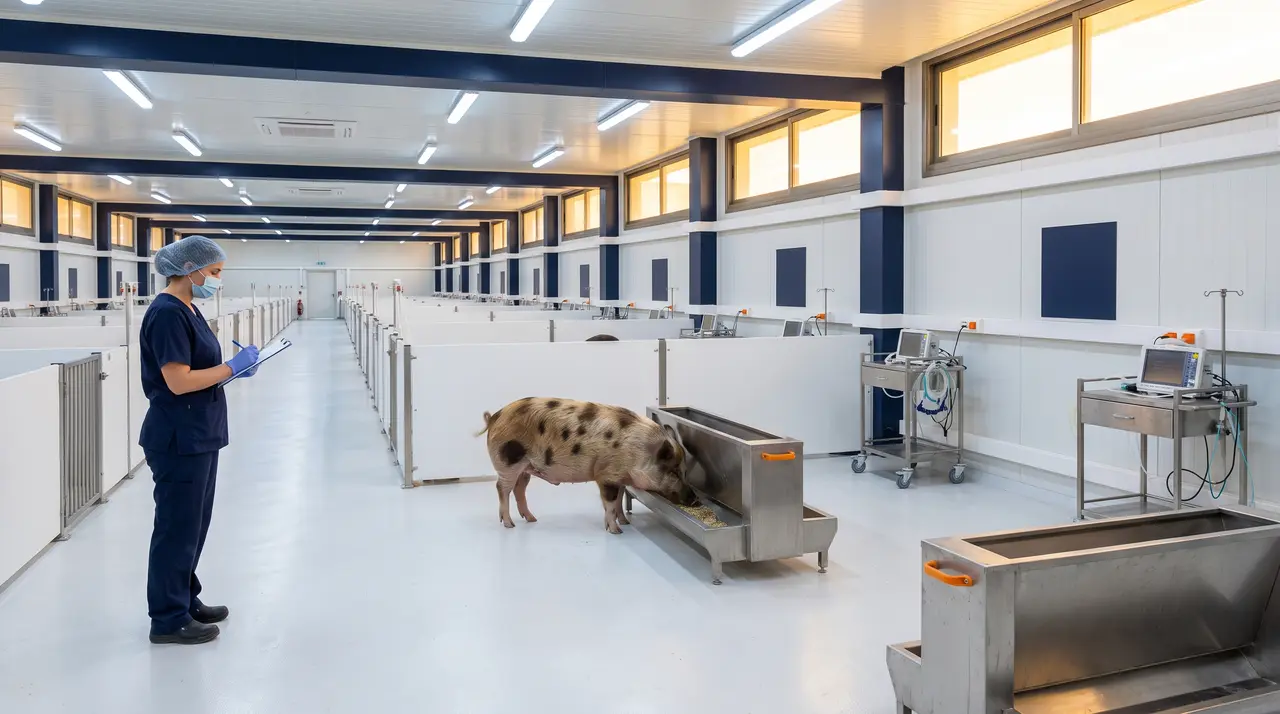
Executing a pig diabetes study requires more than a protocol: it requires surgical suites equipped for large animals, imaging capacity, catheter maintenance capability, and staff who can handle diabetic animals with consistent, low-stress techniques over months. Biotech Farm operates as a large-animal preclinical facility with more than 30 years of experience in leading and managing research, supporting programs from study design through execution with a scientifically supportive, tailored approach. The combination of equipped surgery rooms, an animal house designed for long-term studies, and a professional crew means that complex metabolic protocols, including clamps and serial sampling, can run on schedule.
Frequently Asked Questions
Ready to Plan Your Pig Diabetes Study?
Which induction method, breed, and endpoint panel best fit the question your program needs to answer? Mapping those decisions early, with an experienced large-animal team at your side, saves months of development time and protects data quality. To discuss study design, timelines, and capabilities for pig model diabetes research, reach out through the contact page and start the conversation with a facility built for exactly this kind of work.